Why Meituan and Dianping’s Home‑Service Offerings Failed to Take Off
Estela Young
Series reflections: Successful businesses always share similar reasons for their success, while failed ones each have their own differences. Hopefully we can “learn from history” ...
Series reflections: Successful businesses always share similar reasons for their success, while failed ones each have their own differences. Hopefully we can “learn from history” and one day create our own successful product—Those Years I Made “Dead” Businesses series.
01 Prologue
In the “distant” year 2015, O2O was scorching hot, and on‑site O2O was the hottest of the hot. Yet, less than a year later, Meituan and Dianping announced the shutdown of their on‑site service businesses.
What happened in the meantime? Why didn’t Meituan and Dianping’s on‑site services take off?
This article will try to answer that question.
02 The Beginning of On‑Site Services
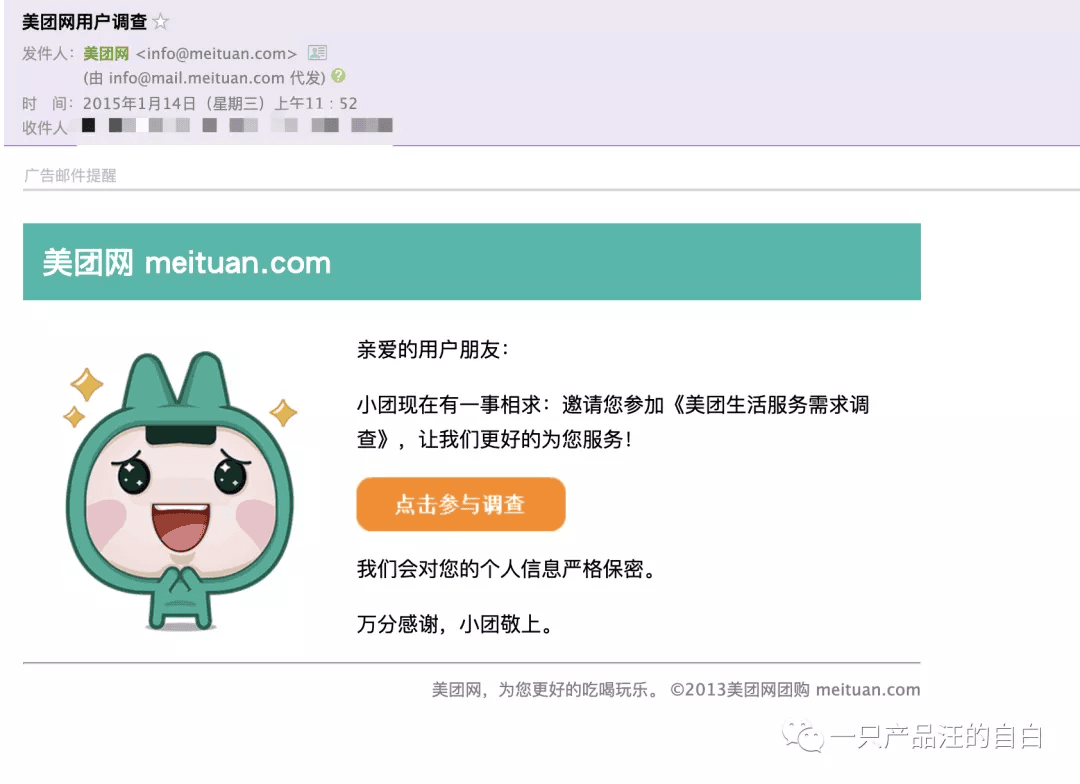
In January 2015, Meituan—still called “Meituan.com” at the time—sent users a survey titled “Meituan Life Service Demand Survey.” The questionnaire went straight to on‑site services.

Three months later, on April 23, Meituan.com officially announced the launch of an open platform for on‑site services, onboarding providers in categories such as housekeeping, beauty, and car wash, including Dudu Nail, eJiaJie, Yun Home Services, Ganji Car Wash, and others. At the same time, the Meituan mobile client added a “On‑Site” top‑level tab as the second entry at the bottom of the screen in seven cities: Beijing, Shanghai, Guangzhou, Wuhan, Chengdu, and Hangzhou.


(Image source: the web)
By 2014, Meituan had already formed a “T‑shaped” business layout: its original group‑buying platform, plus hotels, food delivery, movies, and other services were all blooming. Moreover, Meituan’s user base had surpassed 200 million, with over a million partner merchants, making it China’s largest local‑life service platform.
Meituan’s entry into on‑site services was interpreted as an attempt to expand into more life‑service categories. The future Meituan would not only cover food, drinks, and entertainment, but also clothing, housing, travel—essentially a super‑large, all‑in‑one app.
Looking back seven years later, it feels almost prophetic.
03 Other Contestants
Of course, Meituan was not the only player that entered the on‑site O2O battle in 2015. Others included 58 Daojia, JD Daojia, 360, Dianping, and more.
Although they all called themselves on‑site O2O, each had its own twist.
58 Daojia: Home‑service‑focused
58 Daojia started from local life services, mainly offering nanny, cleaning, and maternity‑nurse services, and later added nail art, moving, repairs, and other on‑site categories.

(Image source: the web)
On September 7 2020, 58 Daojia rebranded as “Tian’e Daojia” and filed a prospectus on July 3 2021, planning a NYSE listing.
JD Daojia: Essentially Delivery‑to‑Door
Another major contestant, JD Daojia, took a different approach.
In 2015, O2O was listed as one of JD’s six key business segments and one of its five core strategies. On March 16 the “Pai Dao Jia” app launched, and on April 16 it was renamed “JD Daojia.”
In its early days, JD Daojia was really a “delivery‑to‑door” errand service, promising delivery of “tens of thousands of products” within two hours for orders within three kilometers, focusing on fresh groceries and daily necessities. Its partnership model mainly involved large supermarkets (e.g., Yonghui).


(Image source: the web)
Dianping: Open‑Platform Model
On May 7 2015, Dianping announced the launch of an open platform for on‑site services. The new client version added “Home Services” as a first‑level entry, initially covering five categories—housekeeping, nail art, eyelash extensions, massage, and laundry—across 15 cities including Beijing, Shanghai, Guangzhou, and Shenzhen. Early partners included Dudu Nail, Kungfu Bear, eBag Wash, eJiaJie, and others.

(Image source: the web)
Dianping’s model was basically the same as Meituan’s, using an open‑platform partnership approach. Unlike 58 Daojia and JD Daojia, which started with a self‑operated model (58 Daojia later added a “self‑operate + platform” dual track), Dianping and Meituan were platform‑first from the start.
04 A Spectacular Rise and a Rapid Fall
Meituan and Dianping
Meituan’s and Dianping’s on‑site services ended quickly.
In October 2015, Meituan and Dianping announced their merger, ushering in a long period of business restructuring.
At the beginning of 2016, Meituan announced the cessation of its on‑site service: contracts with on‑site partners would terminate after January 2016.
On February 1 2016, Dianping announced the shutdown of its “Home Service” business. By then, on‑site services had spanned dozens of categories, including in‑home massage, car maintenance, cleaning, and driver‑for‑hire.
The official statement from Meituan‑Dianping read: “Meituan‑Dianping has adjusted the traffic‑allocation strategy for certain businesses across the two platforms. In this adjustment, the home‑service entry on the homepage was de‑emphasized, but this does not mean we have altered the home‑service business itself. We will continue to incubate and provide various home‑service offerings and, as always, work with our many home‑service partners to deliver a better O2O home experience.”
Thus, the once‑spectacular on‑site service chapter closed for Meituan and Dianping.
Other Contestants
The other players’ subsequent paths diverged.
JD Daojia restructured in 2017, shutting down its home‑service lines—housekeeping, logistics, massage, laundry—and focusing solely on fresh‑food delivery. Today, JD Daojia is part of the Dada Group’s same‑city delivery network, positioned to link retailers and brands and to lead the “instant new‑consumption” model.
JD Daojia still centers on supermarket items (partnering with 80 of the top 100 chain supermarkets) while expanding into electronics (phones, computers) and fast‑moving consumer goods (e.g., Shuanghui, Jierou, Blue Moon). As of the 12‑month period ending June 30 2021, JD Daojia had 51.3 million annual active consumers.
58 Daojia appears to be the only one still showing decent growth. According to its website, by the end of 2020 “Tian’e Daojia” had amassed over 16 million registered users, served more than 4 million customers, and had over 1.4 million registered and certified workers.
However, 58 Daojia remains fundamentally a home‑service company, describing itself in its prospectus as “the nation’s leading home‑service platform.” Its revenue is split into four parts: home‑service, professional‑skill training for service workers, industry‑participant solutions, and other income. In Q1 2021, home‑service revenue accounted for 89.6 % of total revenue.
05 Why Meituan and Dianping’s On‑Site Services Failed
Before tackling this question, we need to clarify what “on‑site service” actually means, because the term covers a wide range of scenarios.
Classification of On‑Site Services
Based on service setting and nature, they can be divided into four categories:
- True on‑site services that occur inside the customer’s home, e.g., housekeeping (regular cleaning, post‑renovation cleaning).
- Extended “pseudo” on‑site services that are essentially the original service plus delivery, e.g., on‑site laundry (they pick up and return clothes) or JD Daojia’s product delivery (they just bring the goods).
- Pseudo on‑site services that normally happen in public spaces but are now brought to the home, e.g., nail art, massage, haircuts, car wash, car maintenance.
- Hard‑to‑classify services that are counted as on‑site, e.g., driver‑for‑hire, car insurance—these are omitted from the discussion because they are ambiguous.
Viability of Business Models
Among the four categories, only the first two have viable business models.
Category 1 – Tian’e Daojia addresses two core problems in the home‑service industry: service standardization and transaction efficiency. It trains workers in a self‑operated manner to deliver relatively standardized services, and it reduces users’ search costs by providing platform endorsement and standardized pricing, thereby matching users and workers more efficiently.
Category 2 – The models vary by service. Errand delivery is low‑price but high‑frequency, and delivery is already a core strength of Meituan Waimai, so its model is sound. On‑site laundry, as pioneered by eBag Wash, combined “errand + community store” to boost per‑store turnover; a newer model pairs “errand + central warehouse,” using lower costs to offer low prices (see “Qin Ge” for a similar approach). In short, these models are viable.
Category 3, however, suffers from two fundamental issues.
First, the experience loss inherent in moving a traditionally in‑store service to the home undermines the essence of service consumption. Consumers may be lazy, but they still value the experience economy—not just the end result, but also the process and ambience. Take on‑site nail art: beyond safety and privacy concerns (especially for women), the in‑store experience includes a well‑designed environment, comfortable seating, a pretty nail‑art station, pleasant background music. At home, the customer must solve a host of logistical problems—where to sit, where the technician sits, where to place equipment, where to plug it in, etc. If I’m lazy but still want nail art, the most convenient and cheap solution might just be to paint my own nails. On‑site nail art is therefore a pseudo‑need.
Second, pricing contradictions make it hard to find a balance. Logically, if a brick‑and‑mortar store offers an on‑site version, the customer should pay an extra “travel fee” (commonly called a service or delivery fee); unless the store has idle capacity, the price should be at least as high as the in‑store rate. Without a physical store, the provider must also cover the craftsman’s extra travel time and transportation costs. In Beijing, on‑site nail technicians reported at least an hour of commute plus a 30‑minute service, earning roughly ¥99 for a 1.5‑hour job (the lowest on‑site nail price). By contrast, an in‑store nail session of half an hour averages ¥200+, with opportunities to upsell higher‑ticket items (eyelash extensions, facial treatments). Thus, the average ticket size for a store customer far exceeds that of an on‑site customer.
These two forces create a core contradiction: the user experience is degraded, suggesting a lower price, while the provider’s fulfillment cost is higher, suggesting a higher price. This is the most fundamental and glaring tension.
In other words, this type of on‑site service is a high‑end niche: only in special circumstances (e.g., an elderly person who cannot leave home for a haircut) does a customer willingly pay more than the normal in‑store price. Consequently, the market size is inherently small—high price, low volume.
Meituan and Dianping’s Strategic Abandonment
Having clarified the above, we can now see why Meituan and Dianping’s on‑site services never took off.
Officially, Meituan‑Dianping cited low user frequency, modest ticket size, lack of habit formation, and unsustainable subsidy models as reasons for shutting down.
In my view, beyond the flawed business model of the services themselves, the deeper reason is that the on‑site segment failed to meet Meituan’s expectations—whether that be driving frequency, traffic, or revenue.
Consider Meituan’s situation in 2015. Its core “to‑restaurant” (dine‑in) business was low‑frequency and unprofitable; food delivery was high‑frequency but still loss‑making (32.5 % market share in 2016). From the perspectives of consumption frequency, revenue (Meituan claimed no revenue pressure at the time), and user growth, on‑site services were unlikely to deliver. Even aggregating all on‑site categories, the overall picture was low frequency, moderate ticket size, and negligible user growth.
Moreover, after the merger, Meituan‑Dianping continued to raise funds but remained loss‑making. In that context, the company deliberately trimmed its portfolio, focusing on food delivery. Alongside on‑site services, the breakfast business was also shut down (it generated neither revenue nor meaningful user growth). Hence, the failure of on‑site services was largely a strategic retreat.
06 Final Thoughts
Internet trends rise and fall like waves—one after another, then quickly vanish into the vast sea.
Today, few people around me can even recall how hot on‑site services once were.
Whether we’re building products or running businesses, we eventually have to return to the simplest logic.
I’m reminded of a line Professor Luo once said in a criminal‑law class: some bar‑exam questions can be answered correctly by any random elderly lady on the street, yet the students who study law every day often get them wrong.
When we’re in the thick of it, it’s easy to become blinded by our own perspective. That’s why we must strive to be the clear‑sighted observer, even if sometimes all we need is ordinary user common sense.
These are the lessons the on‑site business has taught me—may they encourage you as well.
References
- Sina Tech, “Meituan Launches Open Platform for On‑Site Services, Integrating Home‑care, Beauty, etc.”
- 36Kr, “After Meituan’s $700 Million Funding: Digging Deeper into Verticals, No IPO in Two Years, Building a Big Local‑Life Platform”
- 36Kr, “JD’s ‘Daojia’ vs. Meituan’s ‘On‑Site’”
- 36Kr, “The ‘Home‑Service’ Army Gets Busier: Dianping Joins In”
- Tian’e Daojia official site: https://www.daojia.com/aboutus/
WeChat Official Account A Product Dog’s Confession
Recording product insights, reflections, and reading notes.
Scan the QR code to follow—thanks!

Originally written by Estela Young and published in Chinese on 一只产品汪的自白. Translated and edited for DriftSeas with permission.