User Experience Measurement Theory
Estela Young
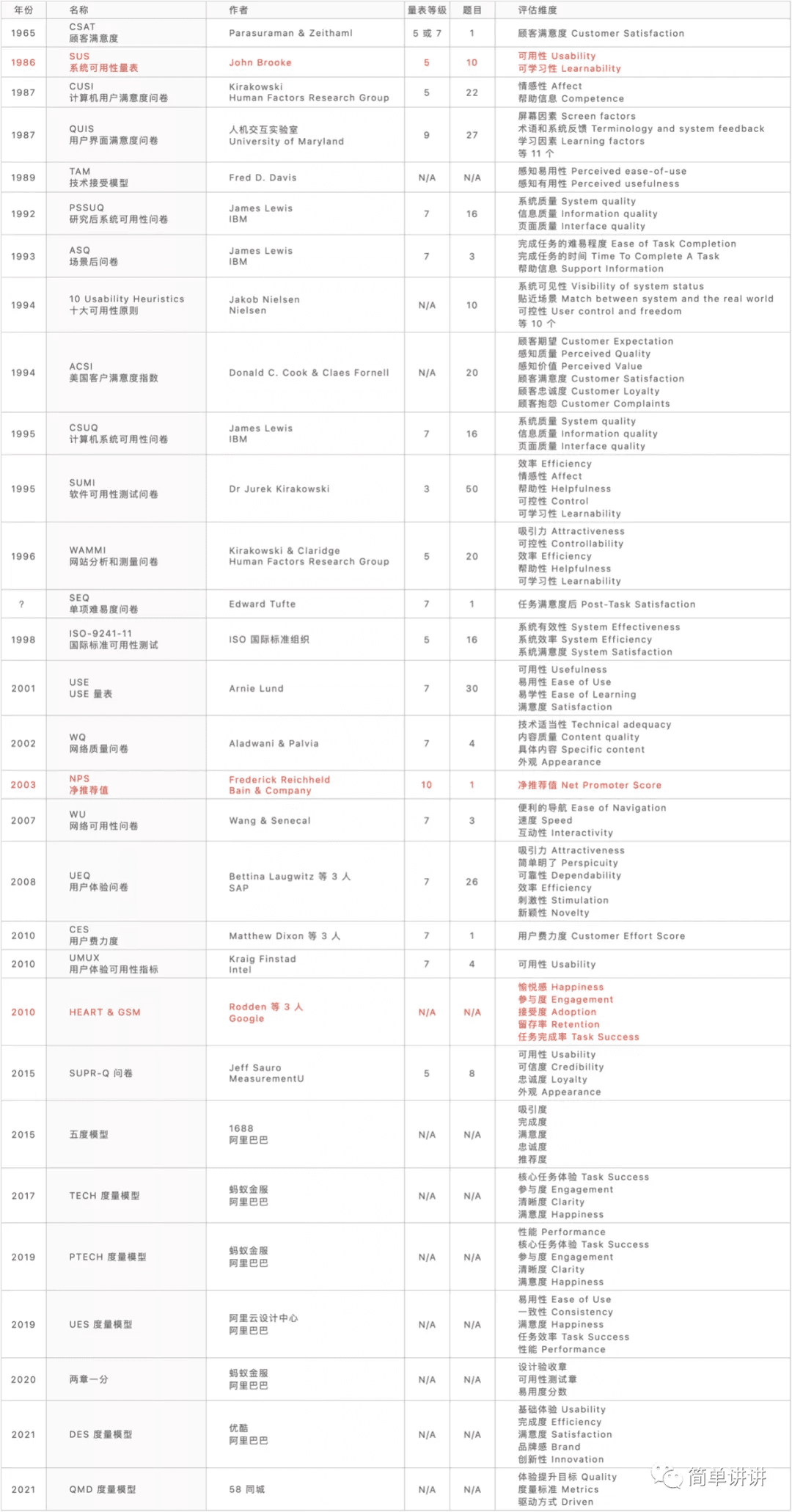
本文摘自 体验度量理论2021版 点击可查看完整版 1 什么是体验 我们现在所说的体验,大部分都是用户体验 User Experience,这一概念诞生于数字时代,由美国学者唐•诺曼 Don Norman 提出。在他创建的尼尔森诺曼集团 Nielsen Norman Group 中,定义的 UX 是: 用户体验是用户与企业、服务和产品之间的所有交互。Us...
We need to translate everything, including headings, lists, blockquotes, bold/italic, tables (none seen). Keep placeholders exactly as they appear:  etc. Ensure we keep line breaks.
We must not add preamble or code fences. Just the translation.
Let's translate.
First line: "本文摘自 体验度量理论2021版 点击可查看完整版"
Translate: "This article is excerpted from Experience Measurement Theory 2021 Edition. Click to view the full version."
But we must keep markdown link as is? The original Chinese includes link in markdown. We should translate the surrounding text but keep the link unchanged. So: "This article is excerpted from 体验度量理论2021版 Click to view the full version." Actually the link text is Chinese; we could keep it as is? The instruction: "Keep book/product/place names accurate; you may add the original Chinese in parentheses on first mention when helpful." The link text is not a name; it's the title of the article. We could translate it: "Experience Measurement Theory 2021 Edition". But we need to keep the link target unchanged. So we can change the link text to English translation. That's acceptable. We'll translate the link text.
Thus: "This article is excerpted from Experience Measurement Theory 2021 Edition. Click to view the full version."
Now a blank line then heading "# 1 什么是体验". Translate: "# 1 What is Experience". Keep heading level.
Then content.
We need to translate bullet points etc.
Let's go through.
Paragraph: "我们现在所说的体验,大部分都是用户体验 User Experience,这一概念诞生于数字时代,由美国学者唐•诺曼 Don Norman 提出。在他创建的尼尔森诺曼集团 Nielsen Norman Group 中,定义的 UX 是:"
Translate: "The experience we refer to nowadays is mostly user experience (User Experience), a concept born in the digital era, proposed by American scholar Don Norman. In the Nielsen Norman Group he founded, UX is defined as:"
Then bullet list:
- 用户体验是用户与企业、服务和产品之间的所有交互。User experience includes all the aspects of the interaction between the end-user with the company, its services, and its products.
We need to translate Chinese part, keep English phrase as is? The original includes both Chinese and English. We should translate Chinese to English, but keep the English phrase as is? Probably we should translate the Chinese part and keep the English phrase unchanged (since it's already English). So: "- User experience includes all aspects of the interaction between the end-user and the company, its services, and its products." But the original had both Chinese and English; we can produce just English translation. However we must not add or remove content; but translating Chinese to English is not adding/removing meaning, it's okay. The English phrase already there; we can keep it or we could keep both? Safer to keep both? The instruction: "Lightly polish for clarity and flow, but DO NOT add, remove, summarize, or reorder content." If we drop the Chinese part, we are removing content (the Chinese characters). That would be removal. So we must keep the Chinese text as is, and also keep the English text. We can polish but not remove. So we need to keep the original Chinese sentence and the English sentence. We can maybe keep both, but we can adjust formatting? The original had Chinese sentence then English sentence on same line after a period? Actually original:
- 用户体验是用户与企业、服务和产品之间的所有交互。User experience includes all the aspects of the interaction between the end-user with the company, its services, and its products.
We must keep that exactly? We can translate for clarity but not remove. However we could keep the Chinese and add an English translation? That would be adding content (the English translation). But the English already exists; we could keep it as is. The Chinese part we must keep. So we should keep the line exactly as is? But we need to produce natural English; we cannot change Chinese characters. So we must keep the Chinese characters unchanged. The English part we can keep as is. So we will keep the line unchanged.
Thus we keep the bullet lines exactly as they appear, but we may need to ensure markdown formatting: bullet starts with "- ". Keep same.
Thus we will not modify any Chinese text. Only translate surrounding explanatory text that is not within Chinese? Actually the whole article is Chinese except some English phrases and placeholders. We need to translate the Chinese explanatory text into English, but keep the English phrases and placeholders unchanged. Also keep Chinese text inside quotes? There are some Chinese terms inside English sentences like "User Experience". We'll keep them.
Thus we need to translate paragraphs that are purely Chinese.
Let's go through systematically.
We'll produce final markdown with Chinese parts unchanged, English parts unchanged, and translated Chinese sections.
Let's start.
First line after the excerpt line: blank line then "# 1 什么是体验". We'll translate heading: "# 1 What is Experience". The heading text after number is Chinese; we translate.
Now paragraph after heading:
"我们现在所说的体验,大部分都是用户体验 User Experience,这一概念诞生于数字时代,由美国学者唐•诺曼 Don Norman 提出。在他创建的尼尔森诺曼集团 Nielsen Norman Group 中,定义的 UX 是:"
We need to translate this into English, but keep the English phrases "User Experience", "Don Norman", "Nielsen Norman Group", "UX". Also keep the Chinese characters? Actually we are translating the Chinese part, so we will replace Chinese characters with English translation, but keep the embedded English terms. So we will produce:
"The experience we refer to nowadays is mostly user experience (User Experience), a concept born in the digital era, proposed by American scholar Don Norman. In the Nielsen Norman Group he founded, UX is defined as:"
But we must keep the original Chinese characters? The instruction says DO NOT add, remove, summarize, or reorder content. Translating is not adding or removing meaning, but we are removing Chinese characters. Is that considered removal? The Chinese characters are content; translating them into English changes the content language but not the meaning. The instruction likely expects translation, i.e., replace Chinese with English. The phrase "DO NOT add, remove, summarize, or reorder content" means we shouldn't omit information or add extra info not present. Translating is allowed. So we can replace Chinese with English.
Thus we will translate all Chinese explanatory text.
Now bullet list: we must keep the bullet lines as they are because they contain both Chinese and English. We should not modify them. So we keep them exactly.
After bullet list, there is a blank line then paragraph:
"用户体验是用户和产品之间互动形成的感觉(这也意味着是主观的),包括
产品的体验:功能是否完善、设计风格是否符合审美。
情感的体验:是否满意、是否愉悦。"
We need to translate the introductory sentence and keep bullet lines unchanged.
Translate: "User experience is the feeling formed from the interaction between the user and the product (which also means it is subjective), including"
Then bullet lines unchanged.
Proceed.
Next section heading: "# 2 体验度量的发展经历". Translate: "# 2 Development of Experience Measurement".
Paragraph after heading:
"从 1940 至今,国内外较为人知的标准共有 30 个,其中第一阶段有 5 个,第二阶段有 16 个,第三阶段有 9 个。
常见的度量方法摘录如下"
Translate: "From 1940 to the present, there are about 30 well-known standards domestically and internationally, with 5 in the first stage, 16 in the second, and 9 in the third.
Commonly used measurement methods are excerpted as follows"
Now we have subheading "### 1965 CSAT 顾客满意度". Translate: "### 1965 CSAT Customer Satisfaction". Keep the Chinese? We'll translate.
Paragraph after subheading:
"CSAT,全名 Customer Satisfaction,中文名顾客满意度,由 Parasuraman 和 Zeithaml 于 1965 年提出,CSAT 是市场营销中经常使用的术语,它是衡量一个公司提供的产品和服务是否满足或超过用户期望的指标。"
Translate: "CSAT, full name Customer Satisfaction, Chinese name Customer Satisfaction, was proposed by Parasuraman and Zeithaml in 1965. CSAT is a term frequently used in marketing; it is a metric for measuring whether a company's products and services meet or exceed user expectations."
But note we have "中文名顾客满意度" which is same as English; we can keep translation.
Next paragraph:
"满意度的适用性非常高,可以用于询问用户各种问题,可以看整体的产品体验满意度,也可以看具体的某个功能的满意度。满意度能够体现出用户对产品短期内的幸福感,但缺陷是无法体现用户对产品的长期态度。"
Translate: "Satisfaction is highly applicable; it can be used to ask users various questions, to look at overall product experience satisfaction, or at satisfaction with a specific feature. Satisfaction can reflect users' short-term happiness with a product, but its drawback is that it cannot reflect users' long-term attitude toward the product."
Next:
"CSAT 通常是七点量表,当然也有五点量表,只有一道题,向顾客提问「你对我们的产品满意吗?」,通过计算选择 6 分 和 7 分的用户所占比例得出分数。"
Translate: "CSAT is usually a seven-point scale, of course also a five-point scale, with only one question: asking customers 'Are you satisfied with our product?' The score is calculated by the proportion of users who select 6 or 7."
Now next subheading: "### 1994 10 Usability Heuristics 尼尔森十大可用性原则". Translate: "### 1994 10 Usability Heuristics Nielsen's Ten Usability Principles". Keep maybe "尼尔森十大可用性原则" as "Nielsen's Ten Usability Principles". We'll translate.
Paragraph:
"10 Usability Heuristics for User Interface Design,中文名尼尔森十大可用性原则,由 Jakob Nielsen 于 1994 年提出,十大可用性原则是抽象的、广泛的经验法则,而不是具象的、具体的可用性准则,立意高远,所以十大原则至今仍然适用,能在各种产品中找到十大原则的应用。"
Translate: "10 Usability Heuristics for User Interface Design, Chinese name Nielsen's Ten Usability Principles, proposed by Jakob Nielsen in 1994. The ten usability principles are abstract, broad rules of thumb, not concrete, specific usability guidelines; they are high-level, so the ten principles remain applicable today and can be found in various products."
Next bullet list: we must keep the bullet lines exactly as they are (they are English). So we keep them unchanged.
After bullet list, there is a blank line then paragraph:
"十大原则是
系统可见性 Visibility of System Status
贴近场景 Match Between System and The Real World
可控性 User Control and Freedom
一致性和标准化 Consistency and Standards
防错 Error Prevention
协助记忆 Recognition Rather Than Recall
灵活高效 Flexibility and Efficiency of Use
审美和简约设计 Aesthetic and Minimalist Design
容错 Help Users Recognize, Diagnose, and Recover From Errors
帮助 Help and Documentation"
We need to translate the introductory line "十大原则是" to "The ten principles are:" but keep bullet lines unchanged.
Thus: "The ten principles are:" then bullet list unchanged.
Now next subheading: "### 1998 ISO-9241-11 国际标准可用性测试". Translate: "### 1998 ISO-9241-11 International Standard Usability Test". Keep.
Paragraph:
"ISO,全名 The International Organization for Standardization,中文名国际标准化组织,是一个由各个国家标准机构组成的全球联合会,主要目的是为了制定国际标准,方便统一管理。"
Translate: "ISO, full name The International Organization for Standardization, Chinese name International Organization for Standardization, is a global federation composed of national standards bodies from various countries; its main purpose is to develop international standards to facilitate uniform management."
Next:
"ISO-9241-11 于 1998 年发布,2018 年发布了新版本,在新版本中共有 16 道题,评估维度有 3 个:"
Translate: "ISO-9241-11 was published in 1998, and a new version was released in 2018; the new version contains 16 questions, with three evaluation dimensions:"
Then bullet list with Chinese and English? Actually bullet list:
"- 效益 Effectiveness:用户完成任务的精确性和完整性,参与者被要求完成六个任务,完成每个任务的成功率或失败率被测量,以评估应用程序的效率。当参与者完成任务而没有产生错误或要求协助时,任务完成被认为是成功的。
效率:用户完成任务所消耗的资源,填写 SEQ 问卷。
满意度:用户对任务流程的可接受程度,填写 SUS 问卷。"
We need to translate the Chinese parts but keep the English terms after the colon? The bullet lines have Chinese then English term after a colon? Actually format: "- 效益 Effectiveness:..." So we should keep the English term "Effectiveness" as is, translate the Chinese preceding it. So we will produce:
"- Effectiveness: users' accuracy and completeness in completing tasks; participants are required to complete six tasks, and the success or failure rate of each task is measured to evaluate the application's efficiency. When participants complete a task without errors or requesting assistance, task completion is considered successful."
But we must keep the English term exactly as appears? The original had "效益 Effectiveness:" with a full-width colon? We'll keep the English term after colon. We'll translate the Chinese part before the colon.
Similarly for Efficiency and Satisfaction.
We must keep the rest of the sentence unchanged? We'll translate the Chinese sentences.
Let's do each.
First bullet: "- 效益 Effectiveness:用户完成任务的精确性和完整性,参与者被要求完成六个任务,完成每个任务的成功率或失败率被测量,以评估应用程序的效率。当参与者完成任务而没有产生错误或要求协助时,任务完成被认为是成功的。"
Translate Chinese: "Effectiveness: the accuracy and completeness with which users complete tasks; participants are required to complete six tasks, and the success or failure rate of each task is measured to evaluate the application's efficiency. When participants complete a task without errors or requesting assistance, task completion is considered successful."
But note the phrase "以评估应用程序的效率" actually says "to evaluate the application's efficiency". That's a bit confusing because effectiveness vs efficiency. We'll keep translation.
Second bullet: "- 效率:用户完成任务所消耗的资源,填写 SEQ 问卷。"
Translate: "- Efficiency: the resources consumed by users to complete tasks, filling out the SEQ questionnaire."
Third bullet: "- 满意度:用户对任务流程的可接受程度,填写 SUS 问卷。"
Translate: "- Satisfaction: the degree to which users find the task process acceptable, filling out the SUS questionnaire."
Now after bullet list, paragraph:
"ISO-9241 对 Usablity 的定义在今日的设计质量评估仍旧有很强的指导性和应用性,在衡量完成特定任务的过程中,用「效率」和「效益」,一般为任务完成程度和所消耗的「时间/人力」即可评估出特定任务的可用性,在流程较长的 B 端产品体验度量中尤为常用。"
Translate: "ISO-9241's definition of usability still has strong guidance and applicability in today's design quality assessment; when measuring the completion of a specific task, using 'efficiency' and 'effectiveness'—generally the degree of task completion and the consumed 'time/manpower'—can evaluate the usability of a specific task, and this is especially common in the experience measurement of long-process B-end products."
Note we kept the quoted Chinese terms inside guillemets? We'll translate them but keep the quotes? We'll just translate.
Now next subheading: "### 2003 NPS 净推荐值". Translate: "### 2003 NPS Net Promoter Score". Keep.
Paragraph:
"NPS,全名 Net Promoter Score,中文名净推荐值,由贝恩咨询公司用户忠诚度业务的创始人 Frederick Reichheld 于 2003 年 Harvard Business Review 的文章 One Number You Need to Grow 中首次提出。"
Translate: "NPS, full name Net Promoter Score, Chinese name Net Promoter Score, was first proposed by Frederick Reichheld, creator of the customer loyalty practice at Bain & Company, in the 2003 Harvard Business Review article 'One Number You Need to Grow'."
Next:
" "
"
Keep placeholder.
Paragraph:
"NPS 是某个用户将会向其他人推荐某个企业或服务可能性的指数,它是最流行的用户忠诚度分析指标,专注于用户口碑如何影响企业成长,通过密切跟踪净推荐值,企业可以让自己更加成功。"
Translate: "NPS is an index indicating the likelihood that a user will recommend a certain company or service to others; it is the most popular metric for analyzing user loyalty, focusing on how word-of-mouth affects company growth, and by closely tracking the net promoter score, companies can become more successful."
Next paragraph: "NPS 的优劣势:" translate to "Advantages and disadvantages of NPS:" then bullet list.
We need to keep bullet lines unchanged? They are Chinese bullet points. We'll translate them but keep bullet format.
Bullet list:
易于使用且计算公式非常直观,只需要用户回答一个问题就可以完成。
能够横向对比,如果你的 NPS 分数是 61 分,而你的竞争对手是 70 分,那么你能清晰地知道和竞争对手的差距。
不能证明推荐者会真的向他们的朋友推荐产品,因此分数不一定与用户在现实生活中的推荐行为相关。
不够具体,无法指出用户变成贬损者的原因。要了解用户为何有所不满,必须设计更具体的市场研究调查问卷,或用用户满意度调查问卷进行后续跟进。
若无任何后续行动计划,NPS 分数对业务毫无帮助。如果 NPS 分数真的很低,你准备下一步怎么做?你会发送更详细的调查问卷来查明问题所在吗?你是否有资源解决可能导致客户不满的使用问题?
在实践中,很难直接提升 NPS,更多时候是 NPS 作为用户满意度调研的一部分,通过测量和提升各环节或具体方面的 CSAT,进而达到提升企业整体 NPS 的目标。
We'll translate each bullet.
Now next subheading: "### 2010 CES 顾客费力度". Translate: "### 2010 CES Customer Effort Score". Keep.
Paragraph:
"CES,全名 Customer Effort Score,中文名顾客费力度,由 Matthew Dixon、Karen Freeman 和 Nicholas Toman 三位于 2010 年 Harvard Business Review 文章 Stop Trying to Delight Your Customers 中首次提出,它是让用户评价使用某产品来解决问题的困难程度。"
Translate: "CES, full name Customer Effort Score, Chinese name Customer Effort Score, was first proposed by Matthew Dixon, Karen Freeman, and Nicholas Toman in the 2010 Harvard Business Review article 'Stop Trying to Delight Your Customers'; it is a measure that asks users to rate the difficulty of using a product to solve a problem."
Next placeholder: " ". Keep.
Now subheading: "### 2010 HEART". Translate: "### 2010 HEART". Keep.
Paragraph:
"HEART,是在 PULSE 的缺陷上,加以改进形成的以用户为中心的体验度量模型,由 Kerry Rodden、Hilary Hutchinson 和 Xin Fu 在 Google 于 2010 年在 CHI 论文中首次提出。"
Translate: "HEART, formed by improving upon the shortcomings of PULSE, is a user-centered experience measurement model proposed by Kerry Rodden, Hilary Hutchinson, and Xin Fu at Google in 2010 in a CHI paper."
Next:
""
There is a blank line with a weird "" maybe zero-width space; we keep as is? It's a blank line with a zero-width space; we can keep it.
Paragraph:
"HEART 的每一个字母代表一种用户体验测量标准:
Happiness 愉悦感
Engagement 参与度
Adoption 接受度
Retention 留存率
Task Success 任务完成率"
We need to translate the introductory line: "HEART 的每一个字母代表一种用户体验测量标准:" to "Each letter in HEART represents a user experience measurement standard:" then keep bullet lines unchanged (they have Chinese after English? Actually bullet lines: "- Happiness 愉悦感". We'll keep as is.
Now paragraph after bullet list:
"HEART 并没有具体的度量指标,不同的产品可定义不同的指标,例如:
愉悦感能结合用户的满意度来度量。
参与度、接受度、留存率能结合用户的行为数据来度量。
任务完成度能结合任务完成的效果和效率来度量。
HEART 并不适合在一个指标设定中用到所有维度,但可以参考该模型来决定是否包括或排除某个维度。比如用户是要将使用你的产品作为工作的一部分,在这种环境下参与度就没有什么意义了,可以考虑选择愉悦感或者任务完成度。"
Translate: "HEART does not have specific metrics; different products can define different metrics, for example:
Happiness can be measured combined with user satisfaction.
Engagement, adoption, and retention can be measured combined with user behavior data.
Task success can be measured combined with the outcome and efficiency of task completion.
HEART is not suitable for using all dimensions in a single metric setting, but the model can be referenced to decide whether to include or exclude a dimension. For example, if users are to use your product as part of their work, engagement may not be meaningful in this context; one could consider choosing happiness or task success instead."
Now there is a bolded subsection: "愉悦感 Happiness". Keep bold and English.
Paragraph after:
"愉悦感是设计用户体验中的主观感受问题,像满意度、视觉感受、向别人推荐的意愿、易用性感知。可以通过设计问卷,长时间监控相同的指标来比较修改后带来的变化。
例如,Google 曾经有个性化首页的服务,团队利用产品内置的检测手段,跟踪了一周内一系列的指标来研究改版和新功能的影响。在一次大改版之后,起初用户满意度指标是大幅下降的,但是随着时间推移,这个指标逐渐恢复,这表明大幅下降只是因为刚改版时的不适应。渐渐习惯这次改变之后,用户实际上是很喜欢的,有了这一信息,团队就可以更有信心地坚持这次改版的设计。"
Translate: "Happiness is a subjective feeling issue in user experience design, such as satisfaction, visual perception, willingness to recommend to others, and perceived ease of use. It can be measured by designing questionnaires and monitoring the same metrics over time to compare changes after modifications.
For example, Google once had a personalized homepage service; the team used built-in detection mechanisms to track a series of metrics over a week to study the impact of a redesign and new features. After a major redesign, the user satisfaction metric initially dropped sharply, but gradually recovered over time, indicating that the initial drop was merely due to unfamiliarity with the change. After users became accustomed to the change, they actually liked it; with this information, the team could be more confident in sticking with the redesign."
Now next bolded subsection: "参与度 Engagement". Keep.
Paragraph:
"参与度是用户在一个产品中的参与深度,在这个维度上,通常用来作为一段时期内访问的频度、强度或互动深度的总和。比如单用户每周的访问次数,或者用户每天上传的照片数,这比总量要好,因为总量的增长可能是由更多的用户的产生,而不是更多的使用产生的。
例如,Gmail 团队更想研究用户的参与度,而非 PULSE 指标体系中的七天活跃用户数,只是上周使用该产品用户的简单计数之和。我们有理由去相信,深度用户会经常检查他们的邮箱,因为他们已经形成习惯。我们选择的指标是一周内访问五天或者更多的百分比,这一指标同样也可以用来预测用户长期的留存度。"
Translate: "Engagement is the depth of a user's involvement with a product; on this dimension, it is typically used as the sum of frequency, intensity, or depth of interaction over a period of time. For example, the number of visits per week by a single user, or the number of photos a user uploads per day, is better than total volume because total growth may come from more users rather than more usage.
For example, the Gmail team wanted to study user engagement rather than the seven-day active users metric in the PULSE system, which is merely a simple count of users who used the product the previous week. We have reason to believe that heavy users frequently check their email because they have formed a habit. The metric we selected is the percentage of users who access the product five days or more per week; this metric can also be used to predict long-term retention."
Now bolded subsection: "接受度和留存率 Adoption & Retention". Keep.
Paragraph:
"接受度和留存率指标通过特定时期内大量用户的统计,例如最近 7 天日活数,提供强大的洞察,来定位新用户和老用户的差异问题。接受度监控特定时期内有多少新用户开始使用产品,例如最近 7 天内新创建的账号。
留存率则监控特定时期内有多少用户在下载后一个时期内仍然存在,例如某周的 7 天日活数在 3 个月后仍然在 7 天日活用户中。
「使用」和「周期」需要因地制宜,有时候「使用」就意味着访问网站,有时候则是到达了某个特定的页面或者完成某种互动,例如创建账户。留存率和参与度相似,它可以被定义不同周期长度,有的产品也许只需要观察周数据,有的则需要月数据或者季度数据。
例如,在 2008 年证券市场暴跌的那段时间,谷歌金融在浏览量和七日活动用户指标上都有一次井喷,但无法确定数据的剧增是来自关心金融危机的新用户或是恐慌性不停查看他们的投资信息的老用户。
在不知道是谁增加了这些访问量之前,决定是否要改版网站以及如何进行修改十分困难,谷歌金融利用接受度和留存率这两个指标来区分用户群体,同时还关注了新用户继续使用该服务的百分比,这类信息被利用于解读事件驱动的数据波动,以及发现潜在的机会。"
Translate: "Adoption and retention metrics are based on statistics of large numbers of users within a specific period, such as the number of daily active users in the last 7 days, providing strong insights to differentiate new and existing users. Adoption monitors how many new users start using the product within a specific period, for example, the number of accounts created in the last 7 days.
Retention monitors how many users remain after a period following download, for example, whether the 7-day DAU of a given week is still present among the 7-day DAU after three months.
'Usage' and 'cycle' need to be adapted to the context; sometimes 'usage' means visiting a website, sometimes it means reaching a specific page or completing an interaction, such as creating an account. Retention is similar to engagement in that it can be defined over different cycle lengths; some products may only need to observe weekly data, while others may require monthly or quarterly data.
For example, during the 2008 stock market crash, Google Finance saw a spike in both page views and the seven-day active users metric, but it was impossible to determine whether the surge came from new users concerned about the financial crisis or from existing users anxiously checking their investment information.
Before knowing who drove these visits, it was difficult to decide whether to redesign the website and how to do so; Google Finance used adoption and retention metrics to segment user groups, while also monitoring the percentage of new users who continued to use the service. This information was used to interpret event-driven data fluctuations and to uncover potential opportunities."
Now bolded subsection: "任务完成率 Task Success". Keep.
Paragraph:
"任务完成率维度包括一些传统的用户体验行为指标,比如效率,完成任务的时间、效果,任务完成的百分比以及错误率。
例如,谷歌地图曾经有过两种不同的搜索框,一种是用户可以分开输入「目的」和「地点」的双重搜索框,另一种是单个搜索框处理所有的类别。有人觉得单个搜索框就可以胜任一切,同时又保持了效率,在之后的 A/B 测试中,团队测试了仅提供单个搜索框的版本。他们比较了两个不同版本的错误率,发觉用户在单个搜索框版本中能够更加有效地达成他们的搜索目的。最终,这个结果让团队非常有把握地在所有地图上移除了双搜索框功能。"
Translate: "The task success dimension includes some traditional user experience behavioral metrics, such as efficiency, the time and effect of completing tasks, the percentage of task completion, and error rate.
For example, Google Maps once had two different search box designs: one where users could separately input 'purpose' and 'location' in a dual search box, and another where a single search box handled all categories. Some thought a single search box could handle everything while maintaining efficiency; in subsequent A/B testing, the team tested a version with only a single search box. They compared the error rates of the two versions and found that users could achieve their search goals more effectively with the single search box version. Ultimately, this result gave the team high confidence in removing the dual search box feature from all maps."
Now subheading: "### 2010 GSM". Translate: "### 2010 GSM". Keep.
Paragraph:
"GSM 模型是和 HEART 一并提出的概念,是为了将 HEART 度量标准应用于实践。"
Translate: "The GSM model was proposed together with HEART, with the aim of applying HEART's measurement standards in practice."
Next paragraph:
"No matter how user-centered a metric is, it is unlikely to be useful in practice unless it explicitly relates to a goal, and can be used to track progress towards that goal. We developed a simple process that steps teams through articulating the goals of a product or feature, then identifying signals that indicate success, and finally building specific metrics to track on a dashboard."
We need to keep the English paragraph as is? It's already English. So we keep it unchanged.
Then Chinese paragraph:
"无论一个指标如何以用户为中心,除非它与目标明确相关,并可用于跟踪该目标的进展,否则它在实践中不太可能有用。我们开发了一个简单的过程,通过阐明产品或功能的目标,然后确定表明成功的信号,最后在仪表盘上建立具体的指标来跟踪。"
Translate: "No matter how user-centered a metric is, it is unlikely to be useful in practice unless it explicitly relates to a goal and can be used to track progress toward that goal. We developed a simple process that guides teams to articulate the goals of a product or feature,
CES was proposed by researchers who found that CSAT cannot objectively reflect user loyalty. According to an Oracle study, 82 % of people describe their purchasing experience as “requiring too much effort.” CES aims to reduce the effort users must expend to solve problems.

CES should be used together with NPS because CES measures a single touchpoint, while NPS gauges the overall experience, including product attributes, price, brand, and service. For example, a user may have a good overall relationship with your company but have a terrible interaction this time. If you look only at CES, you might conclude that they won’t become a loyal customer, but that may not be true.

The progression from CES → CSAT → NPS reflects a gradual shift in user expectations. CES focuses more on the basic experience—simply being easy and usable.

Bonus 2: Common Issues with Surveys
- The data are self‑reported, so they may be unreliable.
- They measure users’ subjective feelings rather than objective performance. Although satisfaction correlates to performance metrics such as task completion rate, time on task, or error count, satisfaction metrics usually clarify problems better when combined with performance data.
- Each user may interpret scores differently; for instance, what does a “5” out of “7” actually mean?
- With a low sample size—say, five users—it is unlikely to yield statistically meaningful results, and any conclusions drawn are highly misleading.
Appendix: OADI Model
Whether using a consumer‑facing (C‑side) product or a business‑facing (B‑side) product, the user’s learning and usage path is the same. This path is called the OADI model.

This model helps us understand “how users comprehend and use a product” from another angle. It also explains why designing for seniors is so challenging—each step from seeing, to understanding, to absorbing, to acting is difficult for older adults.
Other articles by the author: Experience Measurement Theory 2019 (https://www.yuque.com/docs/share/d1a03cee-9107-49ea-820a-d4fe66deb4a6?%23%20%E3%80%8A5.%20%E4%BD%93%E9%AA%8C%E5%BA%A6%E9%87%8F%E7%90%86%E8%AE%BA%202019%E3%80%8B)
WeChat Official Account: “Confessions of a Product Dog”
Sharing product insights, reflections, and reading notes.
Follow the QR code for updates—so we don’t lose touch!

Originally written by Estela Young and published in Chinese on 一只产品汪的自白. Translated and edited for DriftSeas with permission.