The Five Biggest Barriers to Team Collaboration
Estela Young
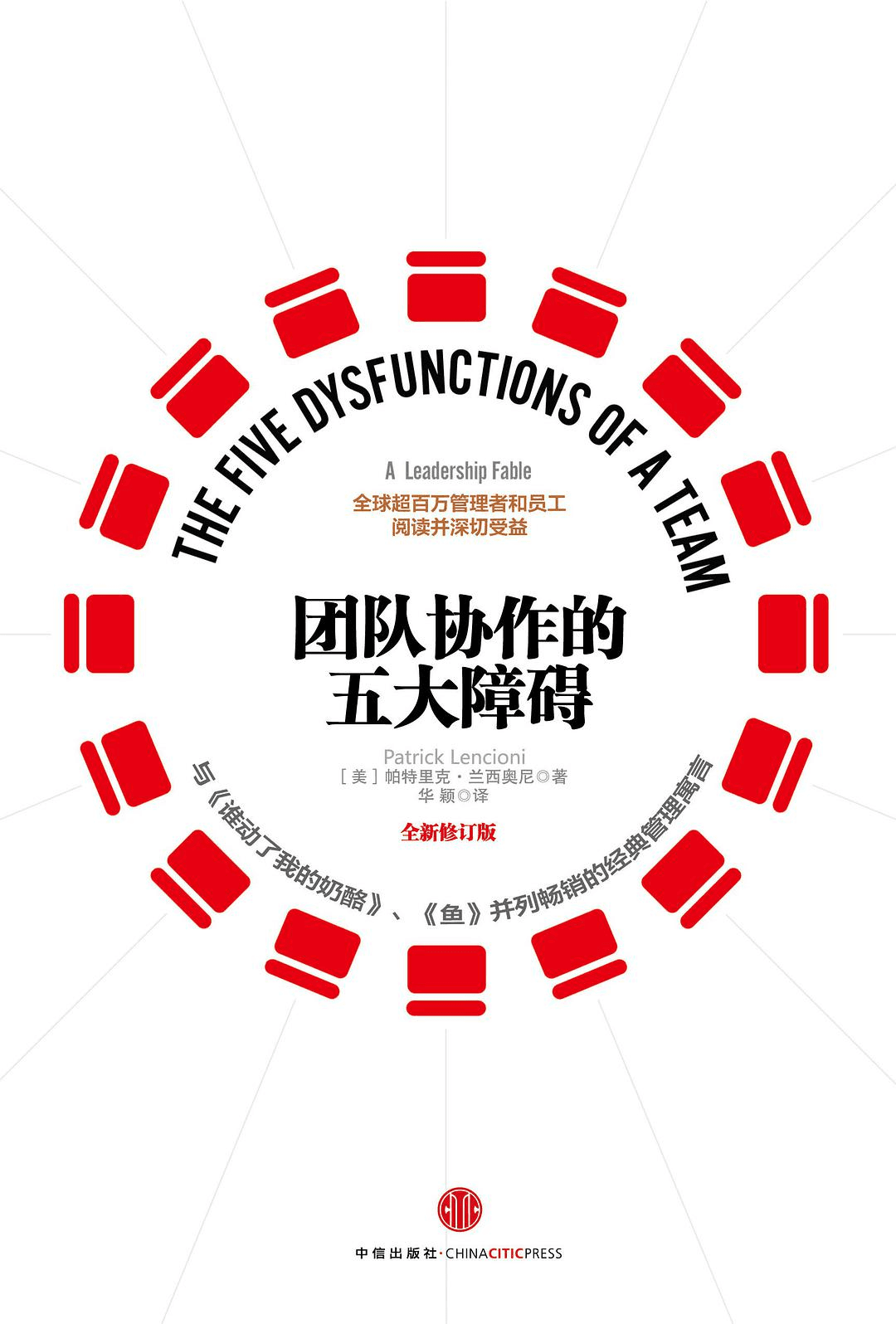
Preface Being at my factory, the thing that gives me the biggest headache and challenge is team collaboration. I stumbled upon this book on WeChat Reading, spent a weekend binge‑re...
Preface
Being at my factory, the thing that gives me the biggest headache and challenge is team collaboration.
I stumbled upon this book on WeChat Reading, spent a weekend binge‑reading it, and it answered many of my lingering questions: it turns out I’m currently experiencing all five major obstacles to teamwork! Those interminable meetings where everyone pretends to get along, the big blow‑outs and finger‑pointing in retrospectives, the endlessly delayed requests that just won’t move forward—aren’t these vivid illustrations of the five obstacles in my own work?
I want to share this sudden realization with everyone, so this excerpt was born. I’m sure you’ll recognize some familiar scenes as you read.
I also hope that once we become aware of these obstacles, we can, through our own effort and the effort of our teammates, build a collaborative atmosphere that is as good as we can make it.
01 Why Team Collaboration Matters
A company’s most fundamental competitive advantage doesn’t come from capital, strategy, or even technology—it comes from teamwork. The ability to collaborate is immensely powerful and exceedingly precious.
If you can get every member of an organization to pull in the same direction, you can thrive under any market condition, in any industry, and overcome any challenge.
In reality, because a team is made up of people with all sorts of flaws, it inevitably carries innate imperfections. That does not mean teamwork is doomed to fail; on the contrary, building a strong team is both feasible and relatively simple—provided you can overcome the difficulties that stand in the way.
02 What Good Team Collaboration Looks Like
Characteristics of a truly united team:
- Members trust one another
- Different opinions are debated directly
- Everyone actively engages in decisions and action plans
- People take responsibility for behaviors that affect the work plan
- The focus is on collective results
03 Does Your Team Face Collaboration Barriers?
A 3‑minute, 15‑question quick test to get your answers.
Score each item using the following scale: 3 = Often, 2 = Sometimes, 1 = Rarely.
- Team members discuss matters enthusiastically and without mutual guard‑standing.
- Team members remind each other of shortcomings or counter‑productive behaviors.
- Team members understand each other’s responsibilities and how those duties serve the collective good.
- When a member’s words or actions are inappropriate or harmful to the group, they promptly and sincerely apologize.
- Team members are willing to sacrifice departmental or personal interests (e.g., budget requests, titles) for the collective benefit.
- Team members dare to publicly acknowledge their own flaws and mistakes.
- Team meetings are inspiring rather than dull.
- Even if there are disagreements at the start of a meeting, by the end everyone believes they can act on the consensus reached.
- If the collective goal fails, morale takes a serious hit.
- During meetings, the most important and toughest issues are brought up for joint discussion.
- If someone is let go, all team members pay close attention to the event.
- Team members know each other’s hobbies and can chat about them.
- After discussing a problem, the team finds a clear solution and starts implementing it immediately.
- Team members monitor each other’s work plans and progress.
- Team members are not eager for immediate recognition of their contributions, but can quickly point out others’ achievements.
Scoring – Fill your total into the table below; the scores correspond to the five major obstacles.
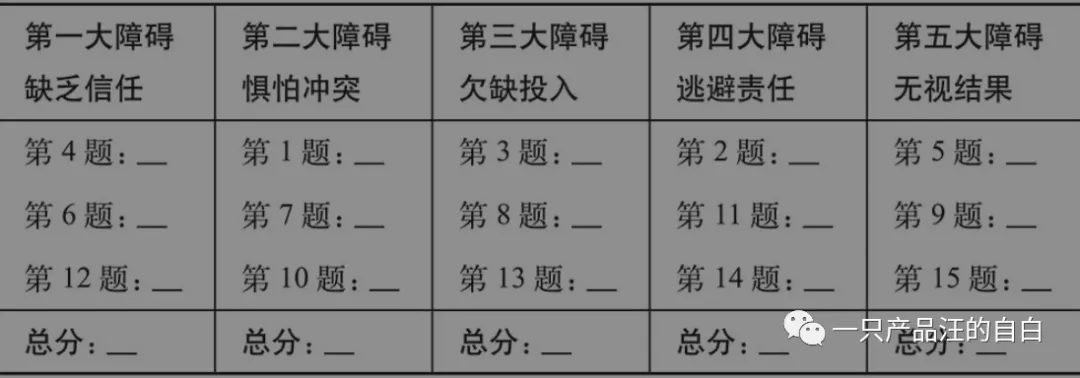
- 8‑9 points: your team likely does not have these obstacles.
- 6‑7 points: your team does have these obstacles.
- 3‑5 points: the obstacles in your team are worth paying attention to.
04 The Five Major Obstacles to Team Collaboration
Two basic facts about corporate teamwork:
- In most companies, genuine collaboration remains hard to achieve.
- Companies fail to achieve good collaboration because they unconsciously fall into five common yet dangerous swamps—the “Five Major Obstacles to Team Collaboration.” People often think these obstacles are independent, but they actually form a pattern where each can become a lethal threat to a corporate team.
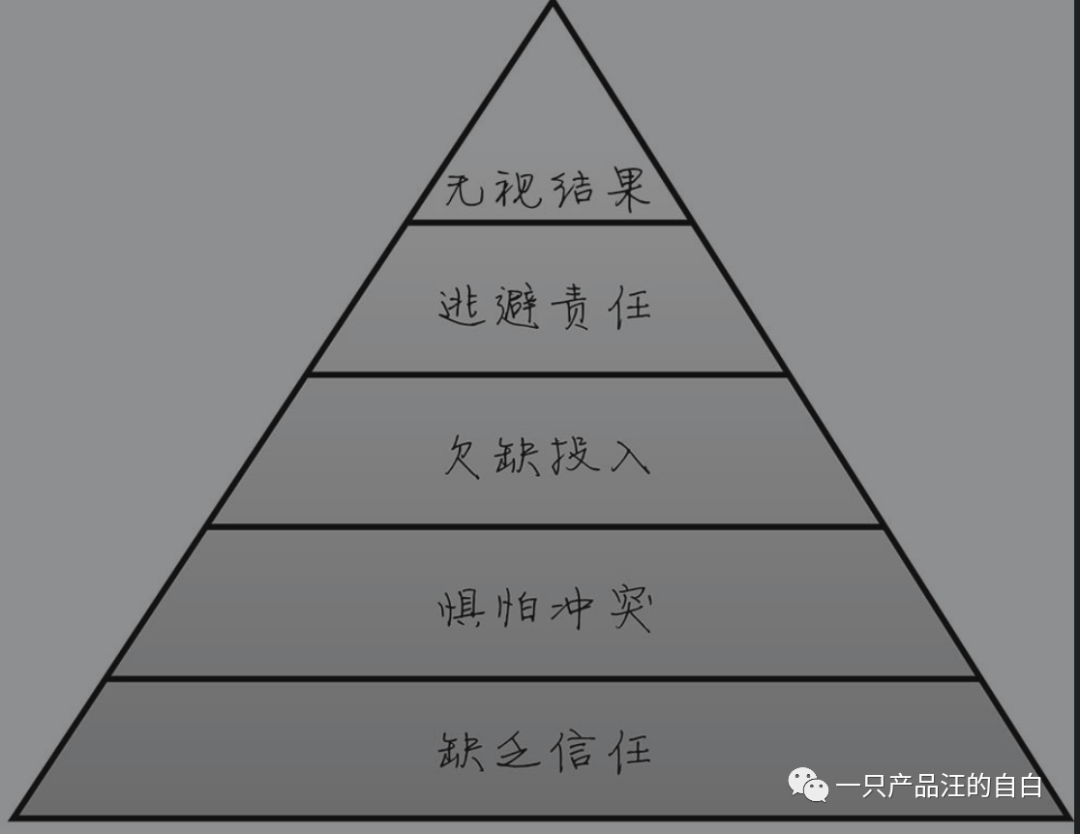
The Five Major Obstacles
- Lack of Trust – Team members fear becoming targets of criticism, so they keep their guard up, refusing to open up about their weaknesses. This prevents any foundation of mutual trust.
- Fear of Conflict – The absence of trust paves the way for this second obstacle. Without trust, teams cannot engage in direct, vigorous idea clashes; instead they have vague, meaningless discussions.
- Lack of Commitment – When healthy debate is missing, commitment suffers. Even if a meeting ends with apparent agreement, few truly align on decisions.
- Avoidance of Accountability – Because commitment is weak and consensus is lacking, members dodge responsibility. Even the most diligent person may hesitate to call out a colleague whose behavior harms the group.
- Inattention to Results – When members put personal or departmental interests above the team’s collective goals, outcomes are ignored.
Specific Manifestations
| Obstacle | Team Behaving With This Obstacle | Ideal Team Collaboration |
|---|---|---|
| Lack of Trust | - Hides weaknesses and mistakes - Unwilling to ask for help or give constructive feedback - Reluctant to assist beyond one’s own duties - Jumps to conclusions about others’ motives without reflection - Unwilling to learn from others’ skills and experience - Wastes time pursuing personal agendas - Holds grudges - Avoids meetings, seeks excuses, minimizes time together |
- Admits weaknesses and mistakes - Actively seeks help - Welcomes questions and attention on one’s domain - Alerts others when work may go awry - Offers feedback and assistance - Appreciates and learns from others’ expertise - Focuses time and energy on solving real problems, not on formality - Apologizes when needed and accepts apologies - Values collective meetings and any chance for collaboration |
| Fear of Conflict | - Meetings are dull - Uses underhanded tactics to attack others behind their backs - Avoids discussing contentious but crucial issues - Mishandles differing opinions and suggestions - Wastes time on superficialities |
- Holds lively, engaging meetings - Gathers input from all members - Resolves real problems quickly - Keeps formalities to a minimum - Brings divergent viewpoints to the table for discussion |
| Lack of Commitment | - Team directives and key tasks are vague - Missed opportunities due to unnecessary delays and over‑analysis - Low confidence, fear of failure - Endless debates without decisions - Re‑questioning already‑made decisions |
- Sets clear work direction and priorities - Fairly considers all members’ views - Cultivates learning from mistakes - Seizes opportunities before competitors act - Moves forward decisively, without hesitation |
| Avoidance of Accountability | - Resentment toward high‑performing colleagues - Settles for mediocrity - No clear sense of timing - Dumps responsibility onto the team leader alone |
- Ensures under‑performing members feel pressure to improve - Freely points out potential issues to peers - Respects colleagues who hold themselves to high standards - Eliminates overly formal performance‑management rituals |
| Inattention to Results | - Stagnates, cannot beat competitors - Loses valuable employees - Pushes personal career goals over team objectives - Teams easily dissolve |
- Attracts and retains strong talent - Does not over‑emphasize individual accolades - Treats success and failure appropriately - Members sacrifice personal gain for the team’s benefit - Strong cohesion; the team does not fall apart easily |
5.1 Obstacle #1: Lack of Trust
In a corporate team, trust means believing that colleagues act in good faith, so you don’t have to be overly cautious or defensive.
Trust is the genuine foundation of collaboration. It requires members to understand each other and deal honestly. Building trust is essential for an efficient team, yet it is often the hardest thing to achieve.
Excellent teams never guard against one another. They don’t hide flaws; they own mistakes, voice opinions, and aren’t afraid of retaliation.
Only top‑performing teams can create this environment. It demands that members admit their weaknesses without fearing attacks. Weaknesses may include personality quirks, skill gaps, interpersonal hassles, errors, or the need for help.
Exposing vulnerabilities to build trust is tough because most successful people have become accustomed to competition and vigilance throughout their careers.
If a team cannot trust each other, the cost is huge. They waste massive time and energy managing personal behavior and forcing communication, dread meetings, and avoid asking for help. Consequently, morale stays low and duplicated effort balloons.
Trust isn’t thinking everyone is the same or that no improvement is needed; it’s recognizing that when a colleague pushes you, it’s because they care about the team.
Testing members’ behaviors and personality traits is one of the most effective ways to build trust, reducing gaps and laying a foundation for mutual understanding.
5.2 Obstacle #2: Fear of Conflict
Healthy, lasting collaboration needs active conflict and debate to move forward. This applies not only to marriages or parent‑child relationships but especially to corporate teams.
If we don’t trust each other, we won’t have open, constructive idea clashes; we’ll merely maintain a superficial harmony.
What we need isn’t fake harmony (everyone pretending to get along), but a team that can argue effectively about issues and emerge unscathed.
5.3 Obstacle #3: Lack of Commitment
Commitment means investing in a plan or decision so that everyone reaches consensus. Beneficial conflict is therefore essential. In practice, however, “consensus” often turns into a compromise that offends no one.
If people don’t voice their views because they think no one will listen, they never truly engage. Most rational people aren’t eager to speak up unless they’re sure others will hear and consider them.
In a team, commitment has two steps: clarifying the problem and reaching agreement. High‑performing teams achieve clear consensus quickly; everyone agrees to act on the final decision, even former dissenters.
The two biggest causes of low commitment are the pursuit of absolute consensus and absolute certainty.
Don’t chase absolute consensus. Great teams understand that demanding total agreement is too costly, so they make necessary concessions. This allows consensus even when perfect alignment is impossible. They know a rational person doesn’t need everyone to adopt their view; they just need to be heard and considered. By ensuring every voice is truly listened to, members are willing to follow the final decision, regardless of who originated it. When discussion stalls, the leader may make the final call.
Don’t chase absolute certainty. Strong teams take pride in setting goals together and striving for them, even if they’re not 100 % sure the decision is correct. They recall the old military adage: deciding is better than indecision. They prefer bold action, adjusting course decisively once they discover the current path is wrong.
Whether the root is the quest for total agreement or total certainty, a management team that can’t align creates deep, unresolved internal conflicts—far more damaging than any of the five obstacles. Such discord ripples down to sub‑teams, causing lethal confusion. A tiny disagreement among senior leaders can become a massive discrepancy for frontline staff trying to interpret conflicting directives.
One simple way to ensure commitment is to set a hard deadline for solving a problem; decisions must be made before that date, and the resolution is enforced through discipline and clear rules. Ambiguity in decisions fuels this obstacle. Overcoming it requires explicit time limits, not only for the final deadline but also for each step of progress, so deviations are spotted and corrected before they consume excessive time and energy.
5.4 Obstacle #4: Avoidance of Accountability
In teamwork, avoidance of accountability means members fail to promptly point out a colleague’s behavior that harms the collective interest.
Once we know what needs to be done and are ready to act, we must own our actions and perform well. It sounds simple, yet most managers shy away from this, especially when it involves calling out a peer, because they want to avoid interpersonal friction.
If you’re not part of the same plan, you’re reluctant to intervene in others’ work. Simply saying “I don’t agree with how you’re doing it” is meaningless.
From now on, every meeting debate will be intense, so meetings won’t be boring. If there’s nothing worth debating, we won’t meet at all.
When leaders cultivate a habit of responsibility within the team, they must also be prepared to act as the final arbitrator when the accountability mechanism breaks down. Such situations are rare, but every member must understand that taking responsibility isn’t about forcing uniformity—it’s about shared ownership, with the leader stepping in when necessary.
5.5 Obstacle #5: Inattention to Results
A team’s relentless, collective pursuit of specific goals and outcomes is the benchmark for any team’s performance.
The final obstacle is that members tend to focus on matters outside the collective work goal. They chase personal recognition and attention, neglecting the team’s interests or overall results.
Collective achievement. For some members, simply being part of the team is enough. They may have personal targets, but the drive isn’t strong enough to make major sacrifices or tolerate the inconvenience of change. Although this sounds dramatic, many teams suffer because members prioritize personal promotion over team success.
Individual achievement. This refers to people focusing on advancing their own position or career at the expense of the group. While self‑awareness is natural, members of a high‑performing team must place collective interests above personal ones.
Bureaucracy in a company means that what a person says and does is aimed at making others react as they expect, rather than reflecting genuine thoughts.
Only teams that overcome excessive individualism can succeed; when every member is overly self‑centered, the whole team suffers and collaboration collapses.
Our task is to achieve results as a whole team—no one may pursue personal status or personal gain, because that would undermine our ability to reach the collective goal and we would all lose.
Of course, the key is to give our goal a simple, clear definition that is specific enough to be actionable. “Profit” alone is not concrete enough to implement; a goal must be tied to our day‑to‑day work. With that in mind, let’s see if we can come up with a more concrete objective.
Each and every one of you is responsible for understanding sales—not just JR; everyone is responsible for understanding the market—not just Miqi; everyone is responsible for staying informed about product development, customer service, finance, and the progress of those functions. Understood?
05 Final Summary
Building good teamwork sounds simple, but putting it into practice is extremely difficult because it requires a high level of organizational discipline and persistence—qualities that few teams possess.
In fact, when a corporate team makes progress by applying a series of methods, it usually takes a considerable amount of time. Success is not based on mysterious, complex theories but on straightforward, easy‑to‑understand principles that must be applied consistently.
Interestingly, it is precisely because a team is made up of imperfect people that it can succeed. By recognizing the human nature of the team, members can overcome personal weaknesses, build trust, engage in constructive debate, give their all, focus on collective results, and ultimately achieve success!
God bless us.
WeChat Official Account: A Product Dog’s Confession
Recording product insights and reflections, sharing reading notes.
Thank you for following.

Originally written by Estela Young and published in Chinese on 一只产品汪的自白. Translated and edited for DriftSeas with permission.