Steer Clear of “The Power of Insensitivity”
Estela Young
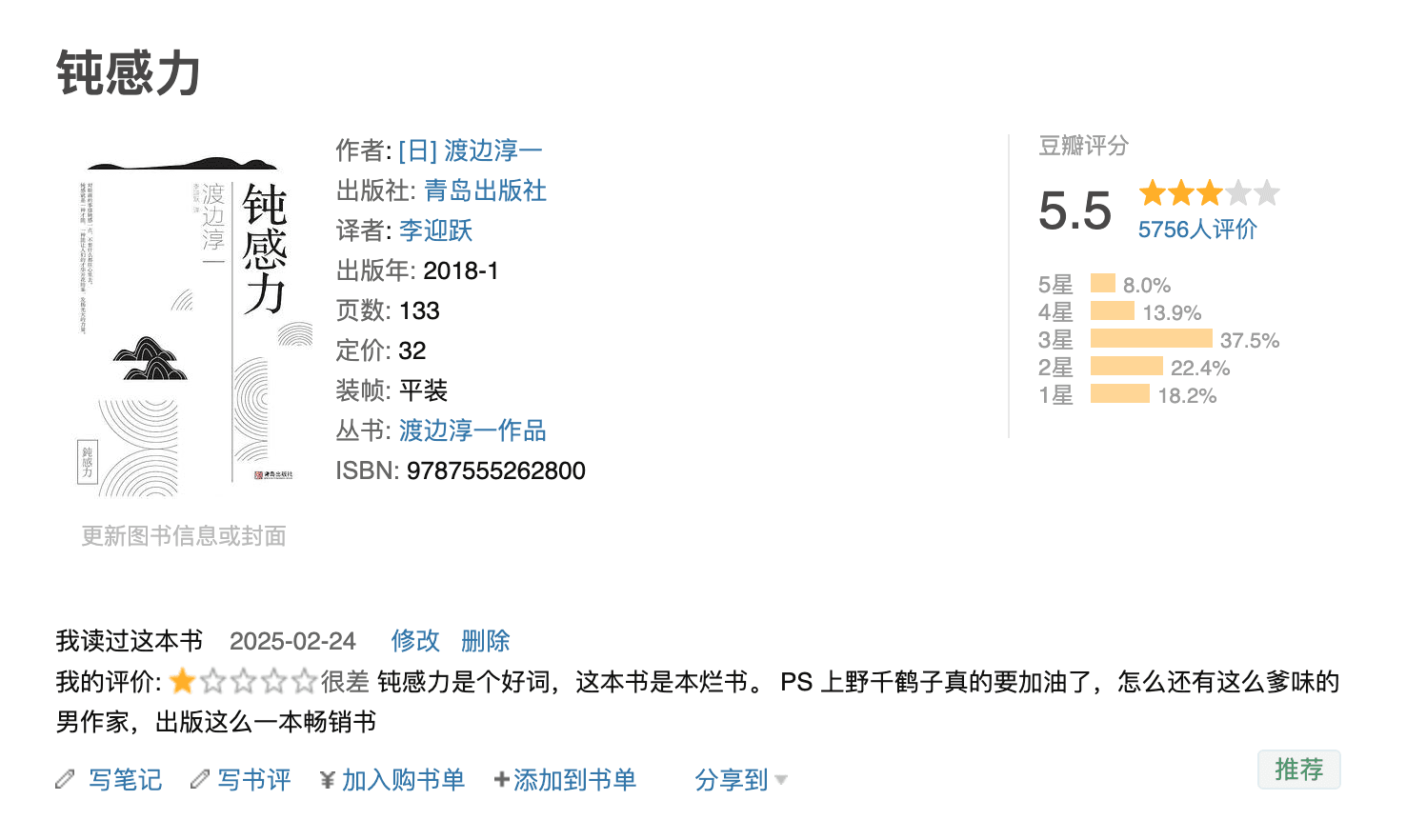
I consider myself a fairly tolerant reader, but there are very few books that leave me utterly speechless—so much so that I almost laugh out loud. Junichi Watanabe’s The Power of I...
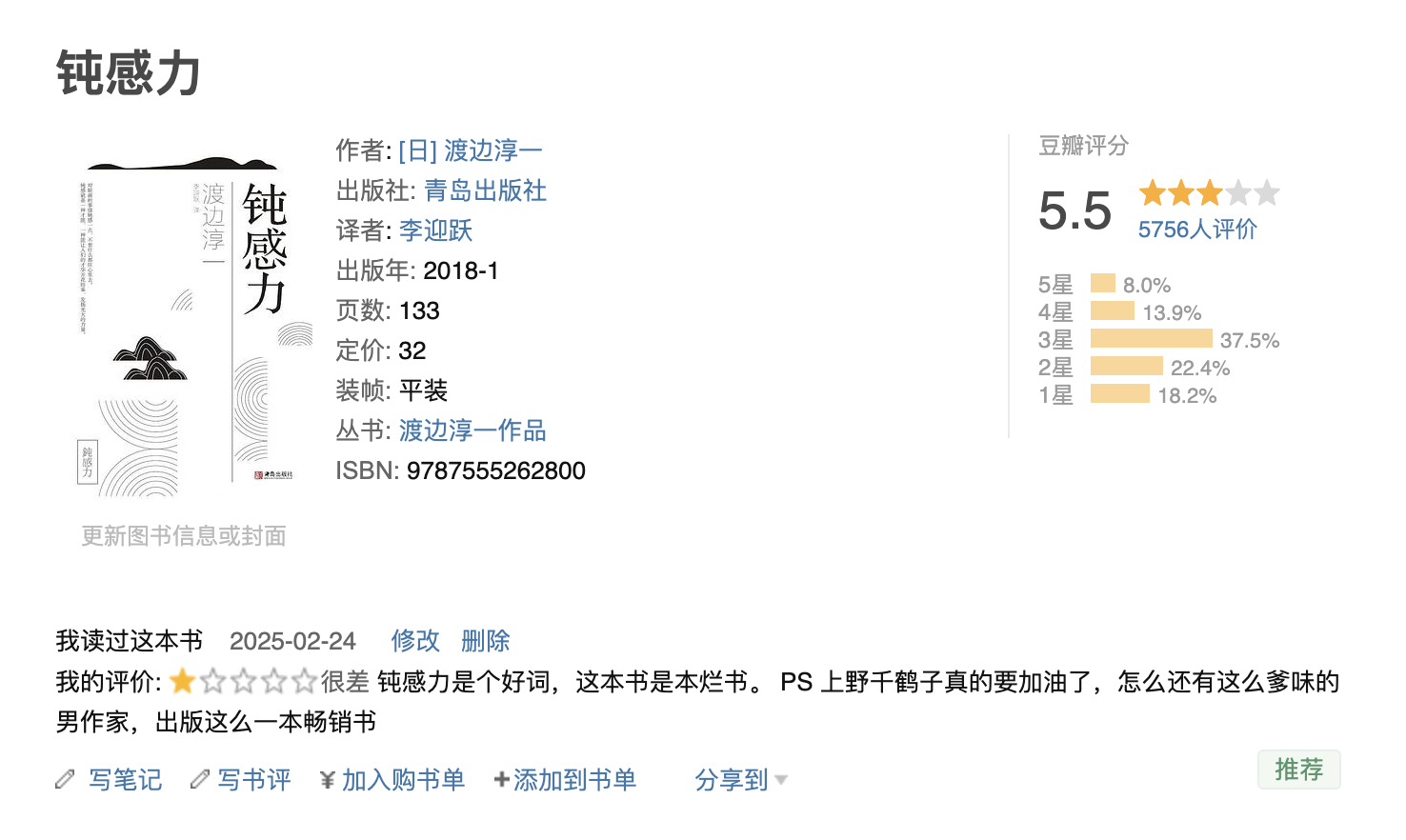
I consider myself a fairly tolerant reader, but there are very few books that leave me utterly speechless—so much so that I almost laugh out loud. Junichi Watanabe’s The Power of Insensitivity (《钝感力》) is one of them.
There are three reasons for my low rating.
First, the book merely explains what “insensitivity” is and why it matters, without ever showing how to become a person with it. As a result, its usefulness for personal growth is extremely limited and falls short of expectations.
Second, the logical arguments in the sections that define insensitivity and discuss its importance are riddled with problems. Some examples invert cause and effect, while others are stretched beyond plausibility. The scattered anecdotes and points never coalesce into a clear definition of insensitivity; the whole thing is chaotic.
For instance, the author tries to use the five senses (eyes, nose, ears, tongue, skin) to argue for the importance of insensitivity. Ignoring the fact that being bitten by a mosquito or suffering from allergic dermatitis would automatically label someone as “not insensitive enough,” the following example is simply baffling:
“Now let’s talk about smell. A moderate level of olfactory ability is sufficient; being overly sensitive can cause trouble. I know a female friend whose sense of smell is so acute that she can identify anyone approaching her by their unique body odor. So if someone comes up behind her, she can instantly guess, ‘You are so‑and‑so.’ She is also extremely sensitive to perfume; a slight change in scent is immediately noticeable. Consequently, she detected her husband’s affair right away, and it reportedly caused a huge fight. One wonders whether this is a blessing or a curse. If her sense of smell weren’t that sharp, perhaps her family would live in peace.”
Note: Some editions have removed this anecdote; perhaps the editor sensed something was off…
Another example cites “Little K, who was berated harshly at work, showed up the next day as if nothing had happened,” and then mentions a sensitive literary‑salon participant, Mr. O, who vanished from the literary scene after repeated rejections, supposedly to illustrate that insensitivity helps in the workplace.
A third illustration turns to dating: men who persist after a woman’s rejection are said to demonstrate insensitivity.
“If a man is rejected just once, most will assume they have no chance and give up. In that case, they’ll never win over the woman they like. I’ve mentioned before that women are waiting for a man’s renewed invitation and advance. The woman may not immediately surrender, but she is indeed waiting. If a man can’t grasp this, he isn’t a good hunter.”
Further claims link insensitivity to romance, marriage, women’s tolerance of pain or cold, the greatness of motherly love (e.g., women breastfeeding in public without embarrassment), and so on. The list of questionable points is long enough that I won’t repeat them all.
Junichi Watanabe, if you don’t understand something, please don’t write about it, okay? 😂
Insensitivity is a mental state, fundamentally different from a physical condition; the two should not be conflated. In fact, a certain degree of bodily sensitivity is beneficial—it helps the brain develop a keen awareness of the body, which in turn improves perception, control, and athletic performance.
Moreover, if “Little K returning to work unruffled after a harsh scolding” counts as insensitivity, then true insensitivity must involve correct attribution, a strong inner core, clear judgment of right and wrong, and steadfast self‑confidence. Mr. O’s disappearance isn’t a lack of insensitivity; it reflects a society that should support newcomers rather than punish them, and certainly shouldn’t treat such setbacks as inevitable.
As for the claim that relentless pursuit of women is insensitivity, it’s 2025—maybe read some feminist literature instead.
In my view, genuine insensitivity looks like this:
- Insensitivity is task separation—a strong, resolute self.
- It is the rare “strategic obliviousness” that follows knowing the truth—being unbothered by trivialities and broad‑minded.
- It is the grit to bite the bullet when faced with difficulty, the resilience discussed in positive psychology.
- It is the ability to encounter a problem without excessive self‑reflection, without ruminating or internal conflict.
- It is not being trapped in the past, but looking forward.
Junichi Watanabe, how does my summary sound?
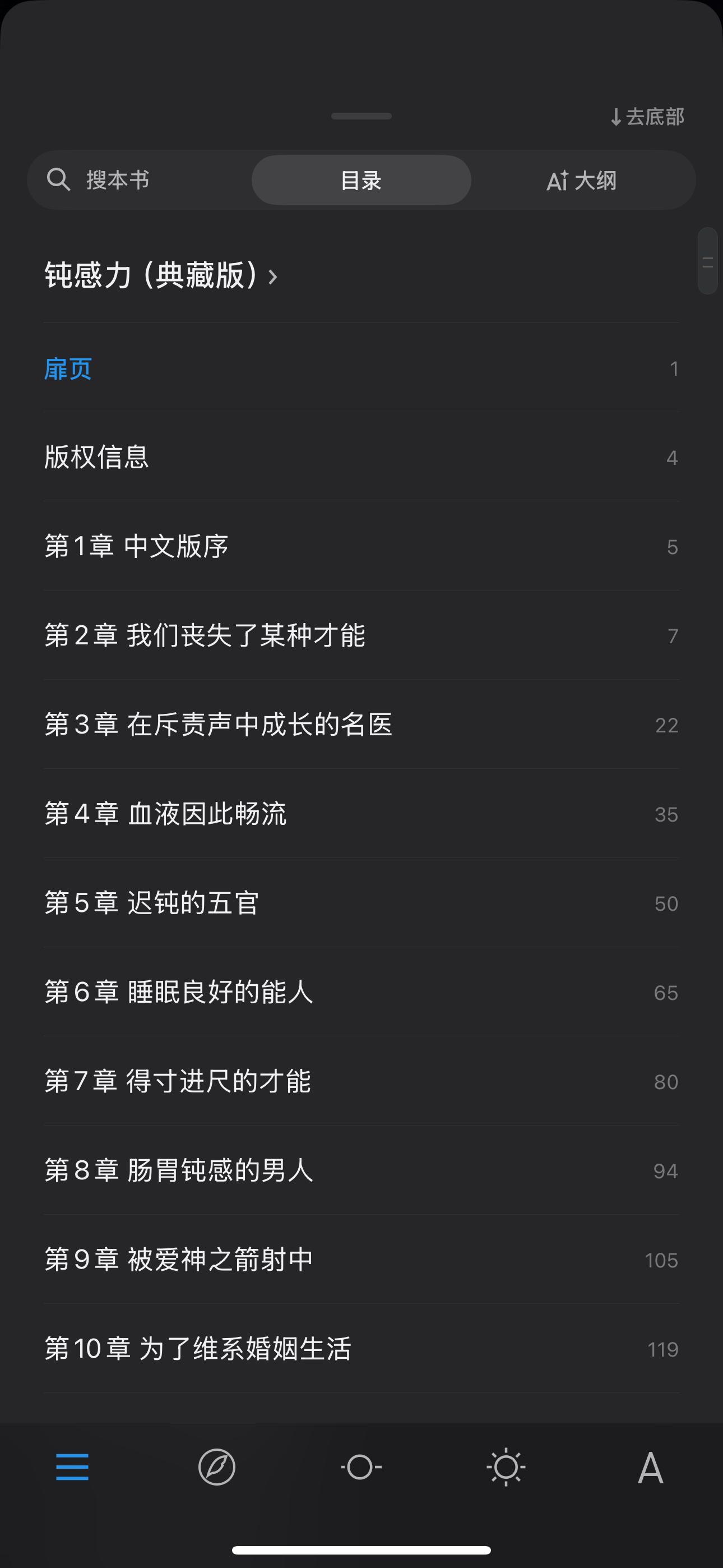
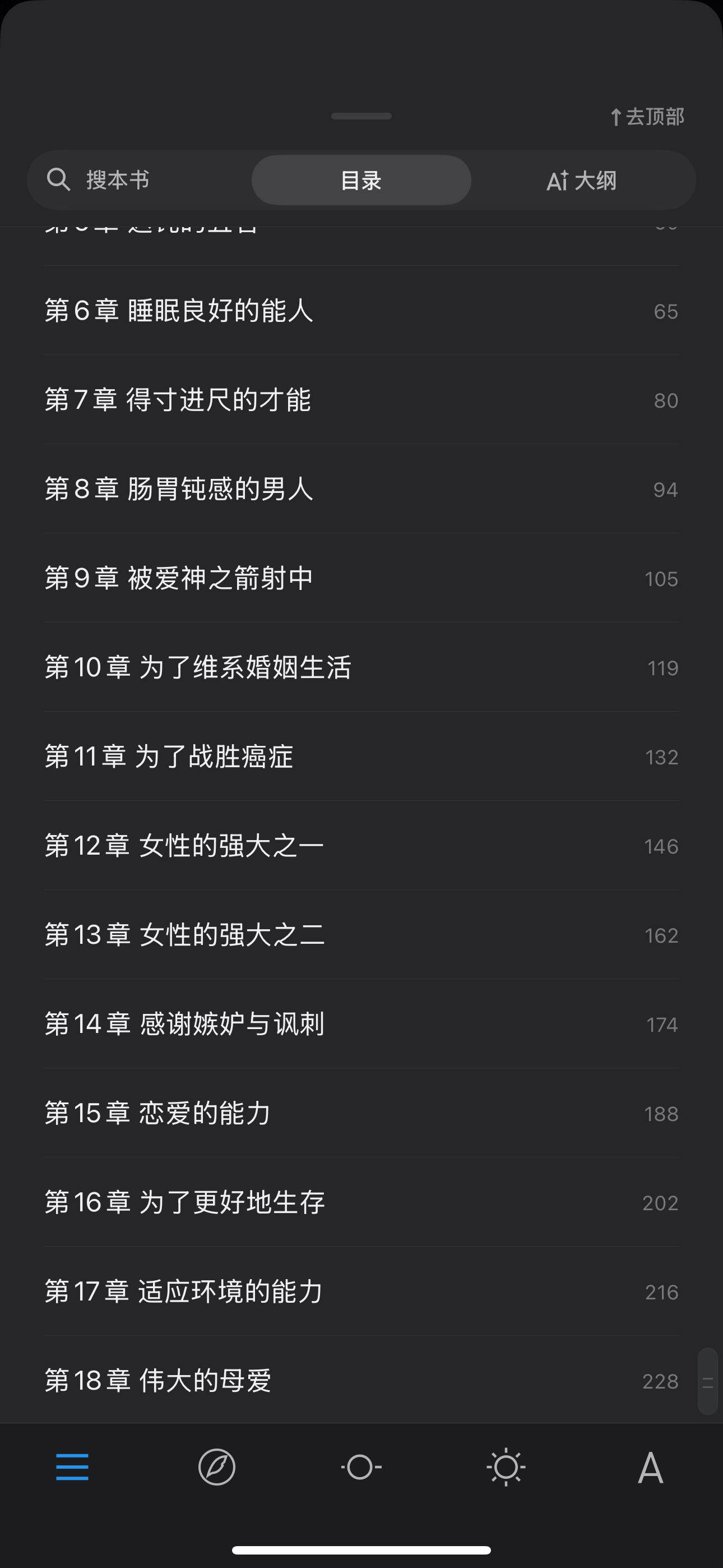
Third, the book’s structure is a mess, as erratic as a wild horse with no logical thread. The table of contents jumps from the body, to cancer, to romance, marriage, women, motherhood—essentially writing wherever the author feels like it. It’s more disjointed than a prose piece, and even good prose maintains a “coherent chaos,” whereas this book is pure chaos.
In short, “insensitivity” is a nice word, but this book is terrible.
Finally, I actually spent ¥9.9 on a paper copy (I’ll never trust a bestseller again), spent two hours reading it, half an hour writing this review, and to make matters worse, the retailer didn’t even recycle the book. Well, at least it won’t harm more readers!
If the content resonated with you, feel free to 👇 like 👍, comment ✏️, share 🤳, and follow 👀. Also, consider following the public account.


Product Manager | Reading | Travel | Psychology | Everyday Life
Originally written by Estela Young and published in Chinese on 一只产品汪的自白. Translated and edited for DriftSeas with permission.
Keywords
Sources & References
- [1]一只产品汪的自白