Old Stories from the South of the City
Estela Young
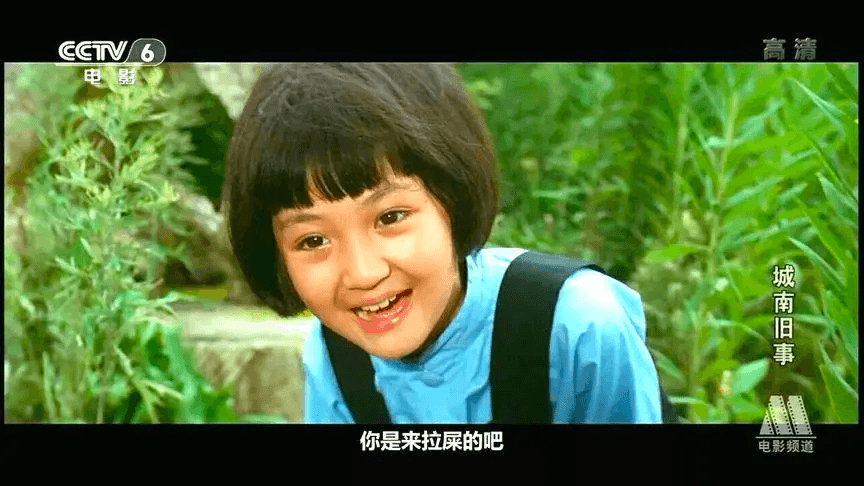
1 本书与作者 The film adaptation of the novel, which gave us the famous meme “You’re here to take a dump, right?” originates from this movie, and the novel contains the same scene. 作者介绍...
1 本书与作者
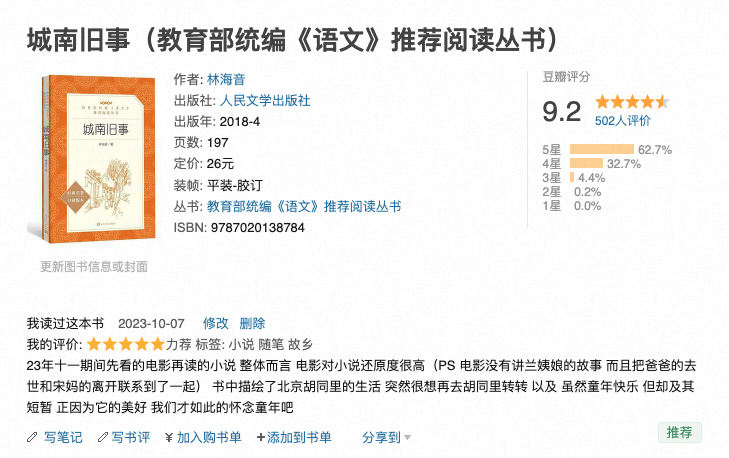
The film adaptation of the novel, which gave us the famous meme “You’re here to take a dump, right?” originates from this movie, and the novel contains the same scene.
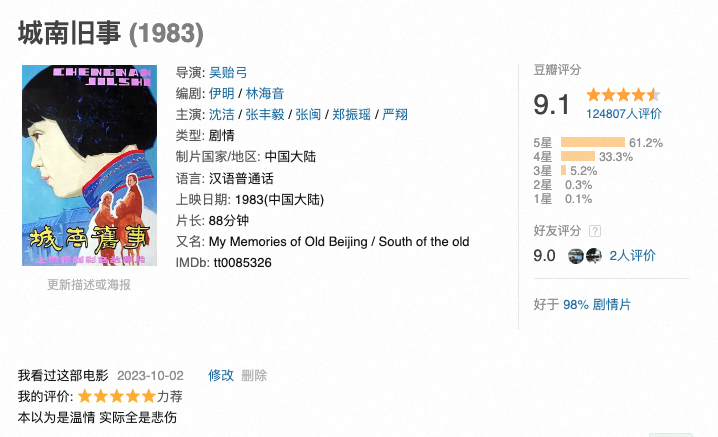
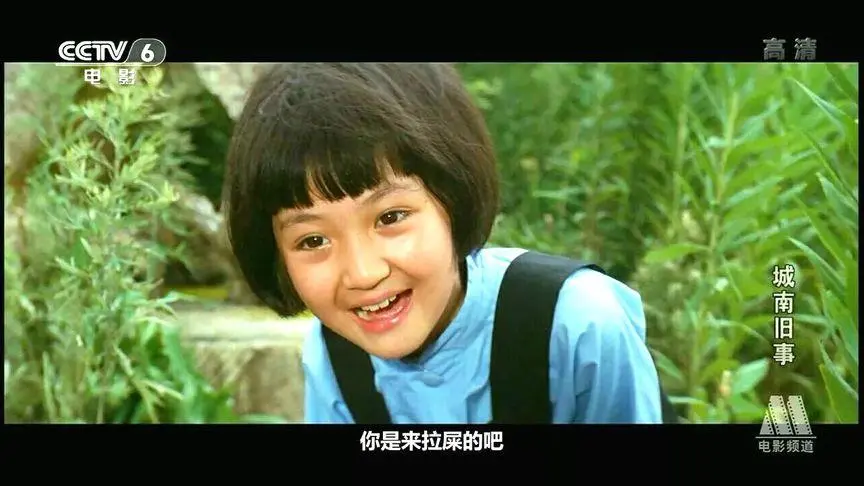
作者介绍
Lin Hai‑yin (1918‑2001) was a renowned Taiwanese female writer. Her birth name was Lin Hanying, and she was affectionately called Ying‑zi. She was originally from Miaosu, Taiwan, and was born in Osaka, Japan, in 1918. In 1923 she moved with her parents to Beijing, where the family settled in the southern part of the city. She left Beijing in 1948 and returned to her native Taiwan.
City‑South Memories (《城南旧事》) is Lin Hai‑yin’s classic semi‑autobiographical novel. With delicate, sincere prose, the book lets readers see the joys, sorrows, loves and losses of the adult world through the innocent eyes of Ying‑zi. Its faint melancholy and lingering yearning have touched generations. The work is both a portrait of the author’s own childhood and a vivid record of ordinary Beijing life and customs of that era. City‑South Memories was selected by Asia Weekly as one of the “Top 100 Chinese Novels of the 20th Century,” was included in the Ministry of Education’s recommended reading list for the new Chinese language curriculum, and many of its chapters have been adopted into primary and secondary school textbooks. The novel has been translated into English, German, Japanese, French, Italian and other languages.
2 推荐理由
During the National Day holiday, a WeChat public account posted an article that sparked my interest in both the film and the book. I watched the movie first and was drawn in by the stories of the madwoman in Huian‑guan and Niu’er, the thief (the “You’re here to take a dump, right?” line comes from that episode), Song Ma and Xiao Shuan, and the father’s illness and death. After that I read the book. Overall, the film stays fairly faithful to the novel; it omits Aunt Lan’s storyline and slightly adjusts Song Ma’s departure, but these changes do not affect the author’s core message.
In my view, the author uses this largely autobiographical novel to convey two main themes.
The first theme is separation. The novel actually tells five groups of stories:
- In “Huian‑guan,” the madwoman Xiu‑zhen reunites with Niu’er’s mother and daughter, only to die suddenly.
- After Ying‑zi suffers a serious illness and moves to a new alley, “We Set Sail” introduces the thief, who becomes her friend until he is arrested.
- “Aunt Lan” shows how Ying‑zi discovers her father’s affection for Aunt Lan, then cleverly helps match her with Uncle De‑xian, thereby protecting her mother’s family.
- “The Donkey Rolls” recounts Song Ma’s tragic loss of a son and a daughter while working in the city.
- In “Father’s Flowers Fell, I Am No Longer a Child,” her father dies; not only do his carefully tended flowers wilt, but the whole family and their way of life are profoundly shaken.
All five narratives share the common thread of parting—partings between Ying‑zi and the central characters, and farewells to past experiences. Since ancient times, separation has been associated with sorrow. The film includes a scene where first‑grade Ying‑zi sings on stage, “Beyond the long pavilion, beside the ancient road, the fragrant grass stretches to the sky… The evening wind brushes the willow, the flute’s sound fades, the sunset beyond the mountains,” to bid farewell to graduating classmates. That song, in fact, is also a farewell to Ying‑zi herself and to every character in the story.
The second theme is growing up. Whether in the book or the film, I found Ying‑zi unusually precocious. She keenly perceives others’ emotions, is willing to talk to people others avoid, understands her mother’s hardships and guards her mother’s love, empathizes with Song Ma’s suffering without judging anyone as good or bad. Such insight and maturity are extraordinary for a preschool‑ or elementary‑age girl. This early maturity stems both from adult expectations—people like Aunt Lan, Song Ma, and her father all tell her, “Ying‑zi, you’re growing up”—and from Ying‑zi’s responsibility as the eldest child. Her father’s death is a massive blow to the family; from that moment, the newly graduated Ying‑zi officially says goodbye to childhood and is forced to become an adult.
“Ying‑zi, don’t be afraid. No matter how difficult something seems, if you bite the bullet and face it, you’ll get through it.” Those were his words before he passed away.
Hearing that, I can’t help feeling a pang of sympathy for little Ying‑zi.
So, I went in expecting a light‑hearted childhood memoir, only to find that the central themes are heavy separation and the inevitability of growing up. Yet that is life, isn’t it?
Nevertheless, the book offers detailed depictions of life in old Beijing hutongs and childhood play, which sparked my curiosity about those neighborhoods (I kept looking up the locations of the hutong and the temple while reading, eager to visit). It also reminded me of my own carefree youth (the book’s chickens versus my rabbits; Ying‑zi’s running through the alleys versus my running in the courtyard), creating a strong resonance.
After finishing this edition, I also read some of the author’s other essays about Beijing, which were equally engaging. One, titled “A Secret Reading Diary,” recounts how a penniless Ying‑zi would sneak into bookstores to read, contrasting her financial embarrassment with a ravenous thirst for knowledge; the story ends warmly and I highly recommend it.
That’s all.
I’ll revisit it whenever I have a spare moment.
WeChat public account: A Product Dog’s Confession
Recording product insights and reflections, sharing reading notes.
Follow us for updates—scan the QR code to stay connected.
⟦TOK3⟩
Originally written by Estela Young and published in Chinese on 一只产品汪的自白. Translated and edited for DriftSeas with permission.
Keywords
Sources & References
- [1]一只产品汪的自白