Mr. Toad Goes to See a Psychologist
Estela Young
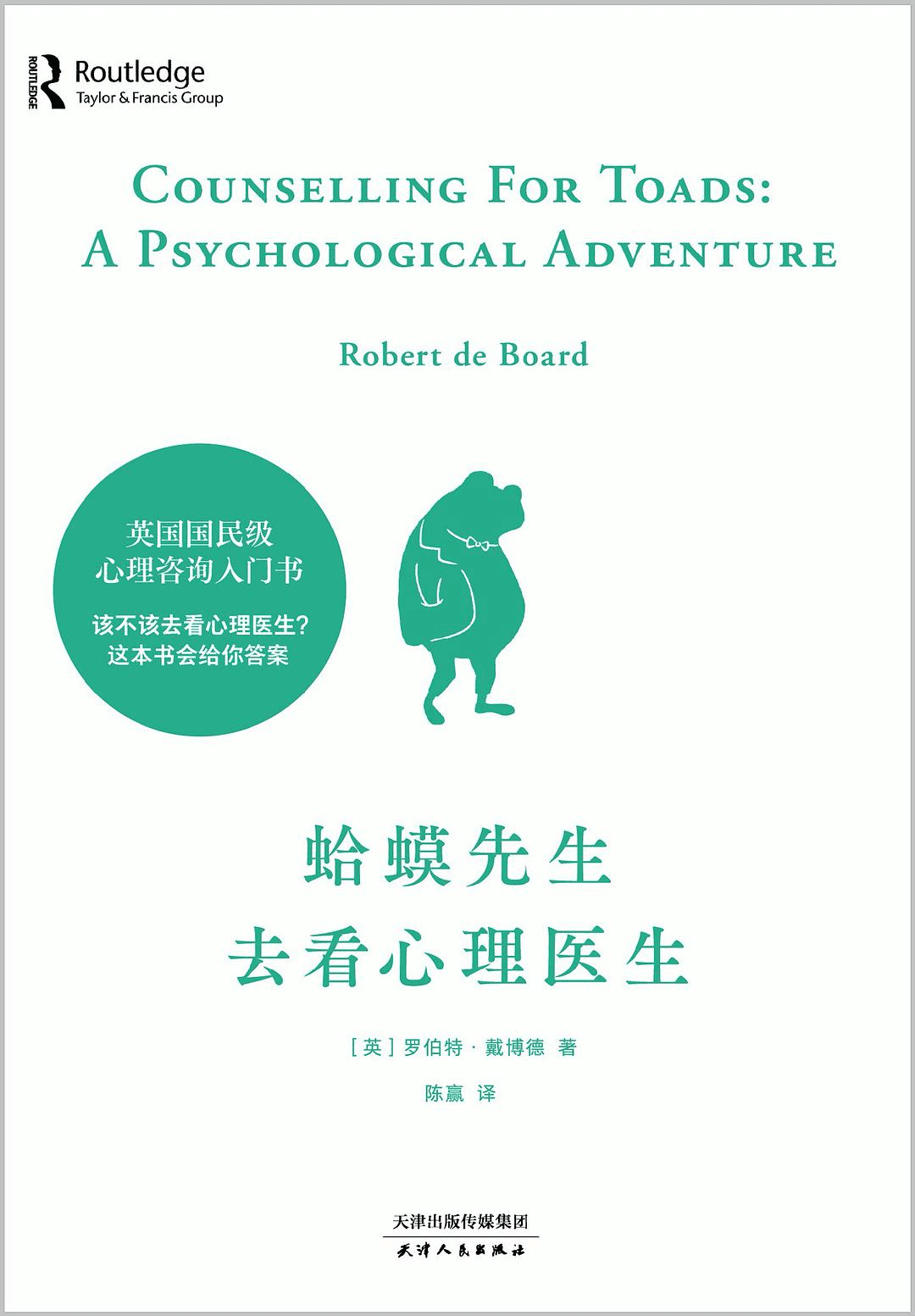
Introduction This book, written by veteran British psychotherapist Robert Deed, has been a national bestseller in the UK for over 20 years as an introductory text to psychological ...
Introduction
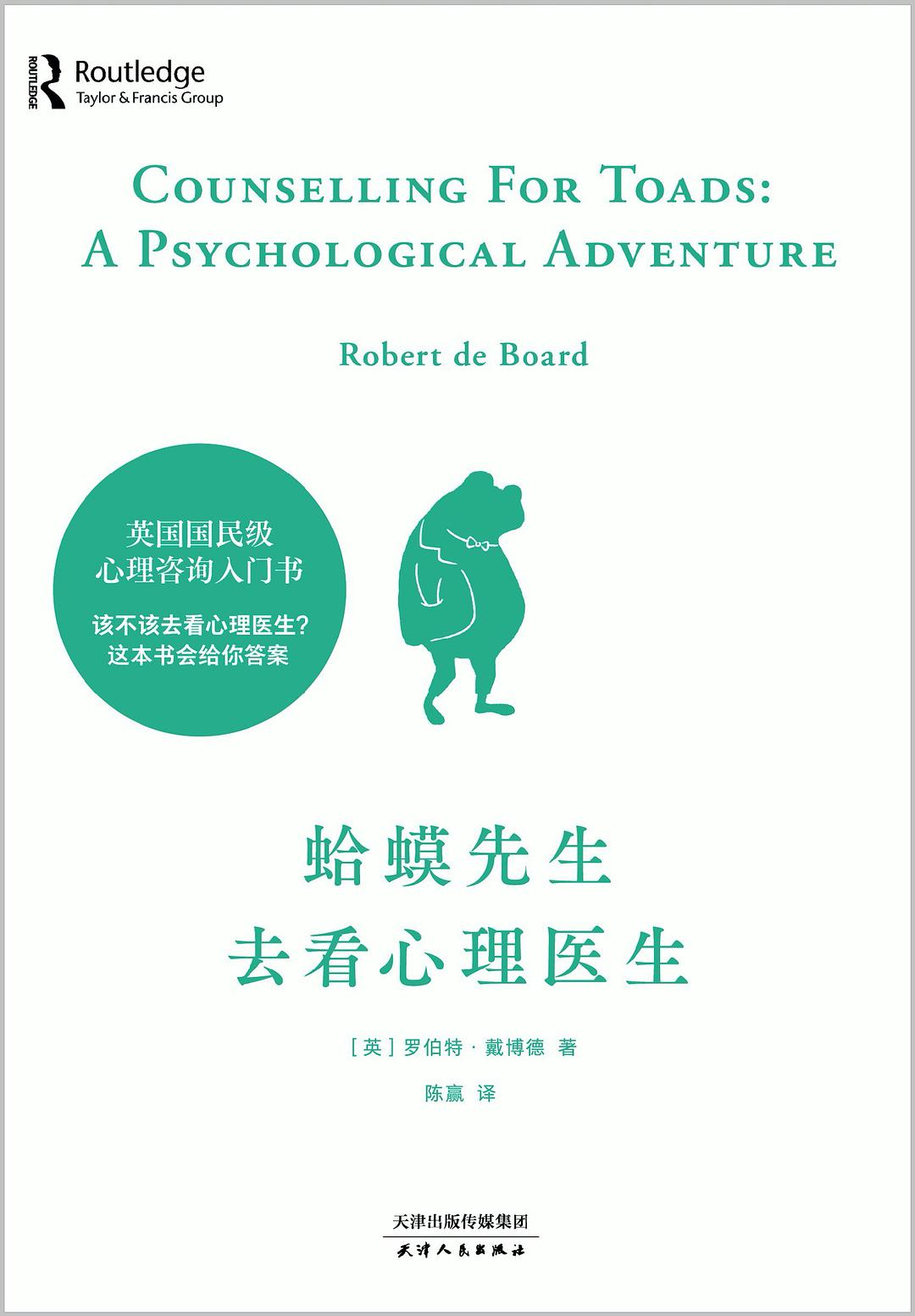
This book, written by veteran British psychotherapist Robert Deed, has been a national bestseller in the UK for over 20 years as an introductory text to psychological counseling.
The book tells the story of Mr. Toad, the protagonist of the famous British fairy tale The Wind in the Willows, who regains his happiness after ten counseling sessions.
It allows ordinary readers to understand the standard template of a counseling process, to grasp what psychotherapy really is, and to experience every detail of counseling through the narrative, while gaining some therapeutic benefit.
Douban rating: 8.6
https://book.douban.com/subject/35143790/
Below are excerpts from the book.
01 Counseling Is Based on Mutual Volition
Counseling is a spontaneous process; both the therapist and the client must act voluntarily.
Therefore, only when you seek counseling for yourself—not to please friends—can genuine collaboration occur. The responsibility for the counseling rests solely with you, not with anyone else. The tasks that must be completed can only be accomplished by yourself.
02 Emotions Have a Thermometer
Imagine we have a thermometer that measures how you feel right now, with ten marks. 1 represents feeling terrible, possibly even suicidal; 5 is neutral—not too bad; 10 indicates great joy.
Where on the 1‑to‑10 scale would you place yourself?
03 Innate Emotions
Everyone is born with basic emotions, like the primary colors red, yellow, and blue. Human basic emotions are joy, sadness, anger, and fear.
As we develop as individuals, emotions and reactions become increasingly personalized, mixing like primary colors to create countless subtle shades and tones.
04 Why We Need to Explore Childhood
Understanding your childhood is a key clue to understanding yourself, because children learn how to cope with and defend against the consequences of their parents’ beliefs and behaviors.
The strongest emotions experienced in childhood inevitably become recurring feelings in adulthood; it’s striking how much adult behavior is actually learned in childhood.
If you want to know yourself better, you need to connect with your emotions and understand them.
Denying them—whether by ignoring or suppressing—ends up like an amputation.
05 Three Ego States
The triad of ego states: Child, Parent, and Adult. This triad also represents the structure of personality.
All three states are essential for a successful life. They have evolved over millennia, so each is important and valuable for survival.
Child Ego State
The Child ego state includes the natural child and the adaptive child.
When faced with demanding, critical parents, the adaptive child chooses compliance: agreeing, pleasing, apologizing, depending.
Compliance can lead some people to adopt dependence as a lifestyle—in other words, they never truly mature.
Growth, at its core, is about reducing and ultimately overcoming dependence on parents.
The hierarchy of how a child releases anger, from strongest to weakest, is: rebellion, tantrum, sulking, willfulness, gloom, procrastination, boredom, withdrawal.
Some people don’t lack anger; they have learned to express it without aggression—choosing a milder release so others don’t sense any unease.
Parent Ego State
The Parent ego state includes the critical parent and the nurturing parent.
- Critical parent: loves to criticize, gets angry, is strict.
- Nurturing parent: “I’m doing this for your good; I feel your pain more than you do.”
Everyone has a Parent ego state.
The Parent acts like a judge, constantly accusing others, sentencing them, and then justifying punishment. In other words, I condemn myself and then punish myself.
No criticism is harsher than self‑criticism, and no judge is stricter than we are to ourselves.
So ask yourself: Can you stop self‑criticism? Can you be kinder to yourself?
Perhaps the most important question is: Can you start loving yourself?
Adult Ego State
The Adult ego state means acting rationally rather than emotionally; it enables us to deal with the reality of the present moment.
In this state we can plan, consider, decide, and act—behaving logically and reasonably.
All our knowledge and skills become available to us, no longer driven by the parental voices of the past or trapped by childhood emotions.
Instead, we can assess the current situation and decide what to do based on facts.
Only in the Adult state can we acquire new knowledge about ourselves.
No one can “make” us feel a certain way; ultimately we choose our feelings.
That choice resembles a conditioned reflex—past experiences teach us to react automatically in similar situations, without conscious thought. We can’t avoid such reactions.
How long will you keep blaming others for your unhappiness?
Instead of the Child’s blame, what about taking responsibility from the Adult’s perspective?
Responsibility includes not only actions but also emotions.
If you take responsibility for yourself, you recognize your autonomy, realize you have the power to change circumstances, and, more importantly, the power to change yourself.
06 Life Coordinates and Psychological Games
Self‑Fulfilling Prophecy
A self‑fulfilling prophecy means we control events so that a prediction comes true; we make our world match our expectations.
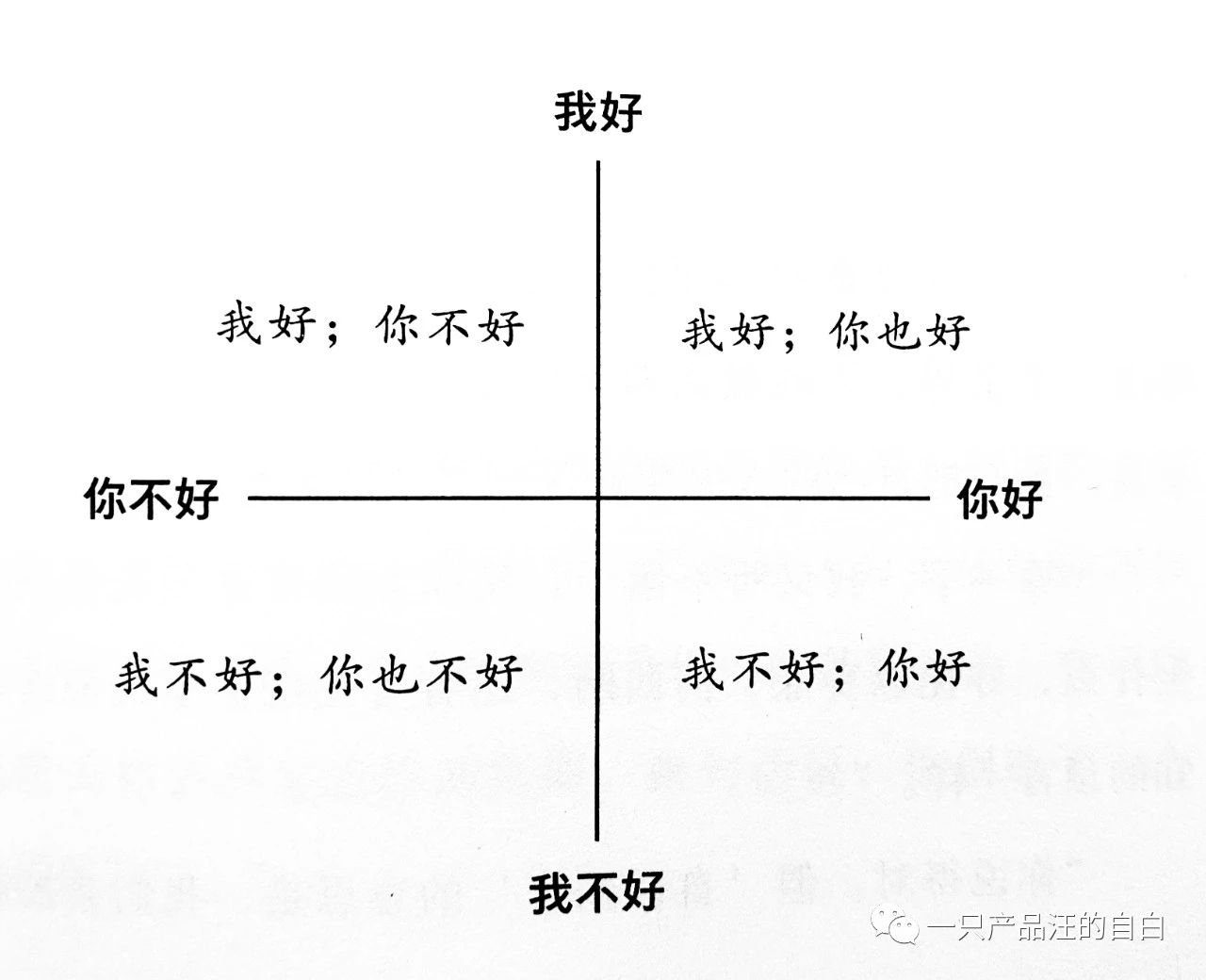
The importance of life coordinates lies in the fact that once we decide, in childhood, on a certain attitude and viewpoint, we continue to uphold that choice throughout life. Those attitudes become the underlying framework of our existence. From then on we build a world that constantly confirms and supports those beliefs and expectations—in other words, we turn our lives into a self‑fulfilling prophecy.
Life Coordinates
Psychological Games
I’m good, you’re not (Critical Parent state)
“Guess what I’m thinking.”
“I’ve got you, you son of a bitch.” – Someone makes a mistake, the boss berates the subordinate, overreacting and shouting. This game lets an angry person find a seemingly legitimate reason to vent, thereby confirming the “I’m good, you’re not” life coordinate. They then view others as incompetent and untrustworthy, taking it upon themselves to scold and punish them, saying, “Otherwise people would think they could get away with mistakes.”
“Why do you always disappoint me?” – The player makes others feel inferior or guilty, confirming the belief “Others are worthless, I’m superior.” This boosts their moral superiority and is often paired with the game “How dare you?”
I’m not good, you are (Sad Child state)
“I’m so unlucky.” – They believe life is controlled by bad forces, feel helpless, become anxious, and think they’re not good enough. Players of this game tend toward depression.
PLOM game: Poor Little Old Me – self‑pity used to harshly criticize oneself.
“No matter what I do, love me.” – Some people create chaos or deliberately cause trouble to test how much tolerance others have for them, then claim, “I told you you’d treat me this way, proving I’m truly terrible and foolish.”
07 High EQ: Independence and Symbiosis
People with high emotional intelligence have strong self‑awareness and understand their own feelings.
They can manage emotions, bounce back from sadness and misfortune, and, importantly, control impulses and practice delayed gratification, avoiding rash decisions and inappropriate actions.
EQ also involves understanding others; a high‑EQ person can discern others’ feelings—a skill called empathy. Perhaps the greatest skill in emotional intelligence is building good relationships by understanding and responding to others’ emotions.
Emotional governance can take you farther on the path of self‑growth because it moves you from being an isolated individual to forming symbiotic relationships.
Independence carries the pride of being oneself, including unique talents and distinctiveness. Symbiosis reflects maturity and self‑acceptance, as well as the ability to accept differences while seeking common ground. Symbiosis enables effective social and work connections and collaborative effort.
The Very End
May your eyes shine, your heart be full of love; accept others, accept yourself.
Let us encourage each other.
2020.04
WeChat public account 一只产品汪的自白 (A Product Dog’s Confession)
Sharing product insights, reflections, and reading notes.
Thanks for following.
Originally written by Estela Young and published in Chinese on 一只产品汪的自白. Translated and edited for DriftSeas with permission.